An “AI winter” is a period when funding and interest in artificial intelligence fall sharply after expectations outrun results. Historians usually point to two: a mid-1970s downturn that followed critical reports in the United States and Britain, and a late-1980s to early-1990s collapse that hit expert systems and specialized hardware. This timeline sets out the key dates, what caused each reversal, and what the pattern says about today’s spending boom, which we also track in our explainer on AI data center capex.
1956 to 1965: the first wave of optimism
The field took its name at a 1956 workshop at Dartmouth College, where researchers proposed that every feature of intelligence could in principle be described precisely enough for a machine to simulate it. Early programs proved logic theorems, played checkers and solved algebra word problems. Government agencies, especially in the United States, funded laboratories with few strings attached, and public predictions were bold. Our short history of AI from Turing to transformers covers this period in more detail.
The problem was that demonstrations in tiny, tidy domains did not scale. A program that handled a few dozen words or a handful of blocks failed when the vocabulary or the world grew. That gap between a demo and a deployment is the thread running through every later downturn.
1966: the ALPAC report and machine translation
In 1966 the Automatic Language Processing Advisory Committee, set up by US sponsors, reported that machine translation was slower, less accurate and more expensive than human translation. Sponsors cut funding for translation research. The report did not cover all of AI, but it showed that funders would ask hard questions about results, and it hit a field that had promised fluent translation within years.
1969: Perceptrons
Marvin Minsky and Seymour Papert’s book Perceptrons analyzed what single-layer neural networks can and cannot compute. Their proofs showed limits such as the inability of a single-layer perceptron to compute the XOR function. The book is often blamed for stalling neural-network research, though historians debate how much of the slowdown it caused and how much came from the lack of a practical way to train multi-layer networks at the time.
1973: the Lighthill report and the first winter
In 1973 the British mathematician James Lighthill delivered a report for the UK Science Research Council that judged AI to have failed to deliver on its grand aims, especially because of the “combinatorial explosion,” the way search problems grow too large to solve. British funding for most AI research was cut sharply. In the United States, DARPA also became more demanding in this period, shifting toward projects with clear, near-term military goals. Together, these changes mark the usual start date for the first winter, which ran roughly through the second half of the 1970s.
1980 to 1987: the expert-systems boom
Research revived around expert systems, programs that encoded the knowledge of human specialists as thousands of if-then rules. The best-known commercial case was a configuration system used by Digital Equipment Corporation to specify computer orders, and companies began building in-house AI groups. A new industry sold specialized Lisp machines, computers designed to run AI languages quickly. In 1982 Japan launched its Fifth Generation Computer Systems project, a government-led effort to build computers around logic programming and parallel processing, which prompted rival programs in the US and Britain.
During this period one technical thread kept growing quietly. In 1986, Rumelhart, Hinton and Williams published their paper on learning by back-propagating errors in Nature, showing a practical way to train multi-layer networks. Our worked example of backpropagation and the chain rule shows the idea in numbers.
1987 to 1993: the second winter
Several things went wrong at once.

- Hardware collapsed. General-purpose workstations and desktop computers caught up with Lisp machines at far lower prices, and the specialized market largely disappeared around 1987.
- Expert systems proved brittle and costly to maintain. Rule bases were hard to update, they failed on cases their authors had not foreseen, and they could not learn from data.
- Large projects missed their goals. Japan’s Fifth Generation project ended in the early 1990s without delivering the general-purpose machines it had described, and US funding agencies grew cautious about broad AI promises.
Many companies rebranded their work as “machine learning,” “informatics” or “knowledge-based systems” to avoid the label that had become a liability.
1993 onward: recovery through narrow wins
The recovery came from measurable progress rather than grand claims. Statistical methods improved speech recognition and language processing, and computing power kept growing. IBM’s Deep Blue beat world chess champion Garry Kasparov in 1997, and by 2012 deep neural networks trained on GPUs won the ImageNet image-recognition contest by a wide margin, restarting a boom that continues today. See our list of deep learning’s ten milestones for the sequence after 2012.
What the winters have in common
Looking across both downturns, a few patterns recur.
- Demonstrations were mistaken for products. Success on narrow benchmarks was extrapolated to open-ended tasks.
- Funding was tied to promises with deadlines. When the deadlines passed, sponsors reassessed.
- A key technique was missing. Multi-layer training, large datasets and cheap computing all arrived later.
- Capital sat in a narrow set of assets. The Lisp machine business was a bet on one hardware design that general computers undercut.
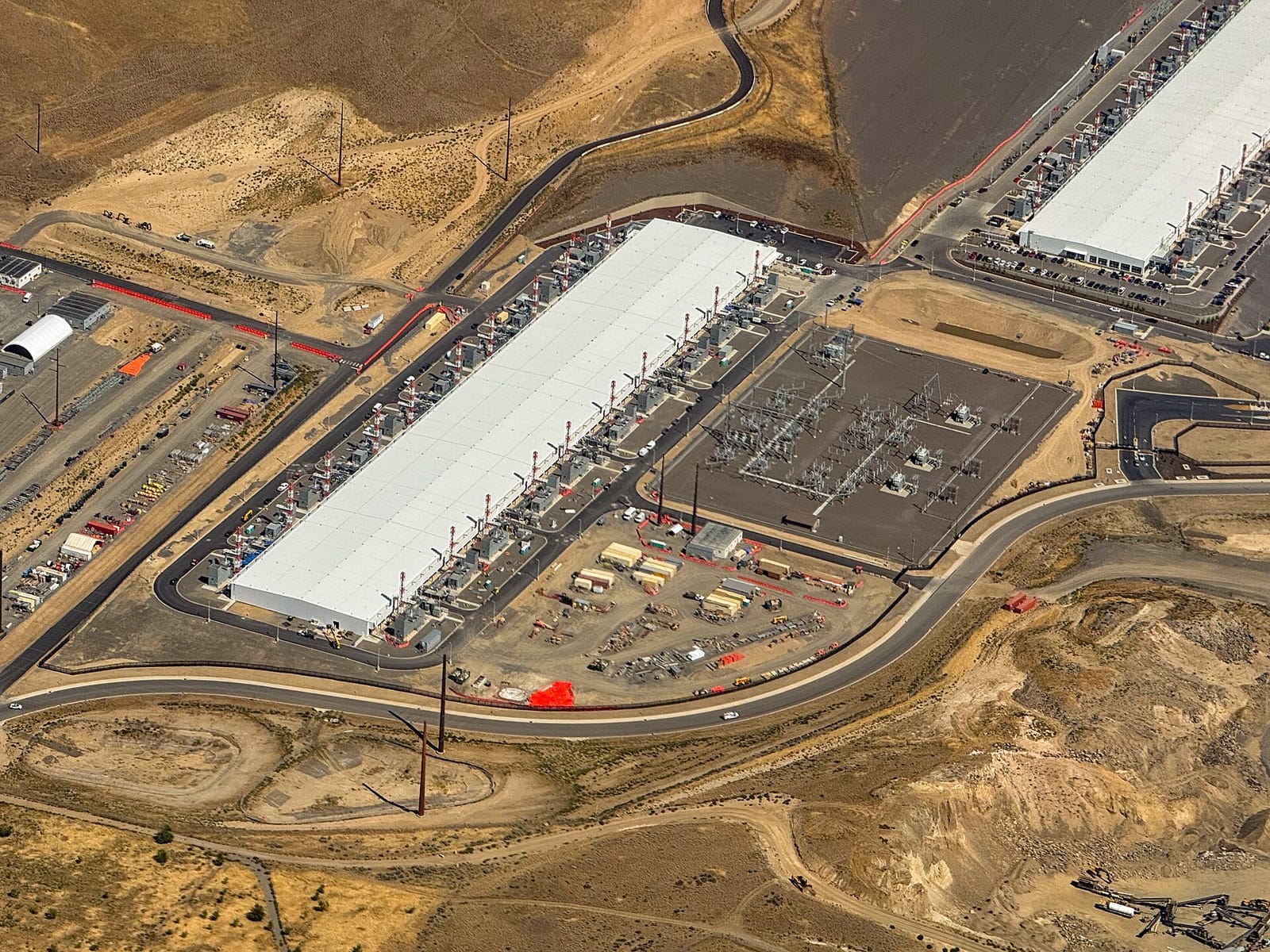
Whether today’s cycle will repeat these patterns is a fair question, but not an answerable one from history alone. Current systems are used by hundreds of millions of people and earn revenue, which the expert systems of the 1980s rarely did at scale. At the same time, spending on data centers and chips is large and concentrated, which echoes point four.
What to watch next
- Whether revenue from AI products keeps pace with the capital being committed to compute.
- Whether current methods hit limits on data, energy or reliability that new techniques must address.
- How public funders and investors respond if headline benchmarks stop improving.
- Whether specialized hardware bets of today are undercut by general-purpose improvements, as Lisp machines were.
Key takeaways
- The first AI winter followed the 1966 ALPAC report, the 1969 Perceptrons critique and the 1973 Lighthill report.
- The second, from about 1987 to 1993, followed the collapse of the Lisp machine market and the stalling of expert systems and the Fifth Generation project.
- Both came after funding was tied to promises that research could not yet meet.
- Recovery relied on narrower, measurable results and on later advances such as backpropagation, data and GPUs.
- The comparison with today is a useful question, not a forecast.
Frequently asked questions
What is an AI winter?
It is a period of reduced funding and interest in artificial intelligence that follows inflated expectations. The term was used by researchers in the 1980s, drawing an analogy with a nuclear winter.
When were the AI winters?
The first is usually dated to the mid-1970s, after the Lighthill report of 1973. The second ran from about 1987 to the early 1990s. Exact dates vary by country and subfield.
Did Perceptrons cause the first AI winter?
Not on its own. It exposed real limits of single-layer networks and discouraged some funding, but the 1966 ALPAC report and the 1973 Lighthill report also shaped the downturn.