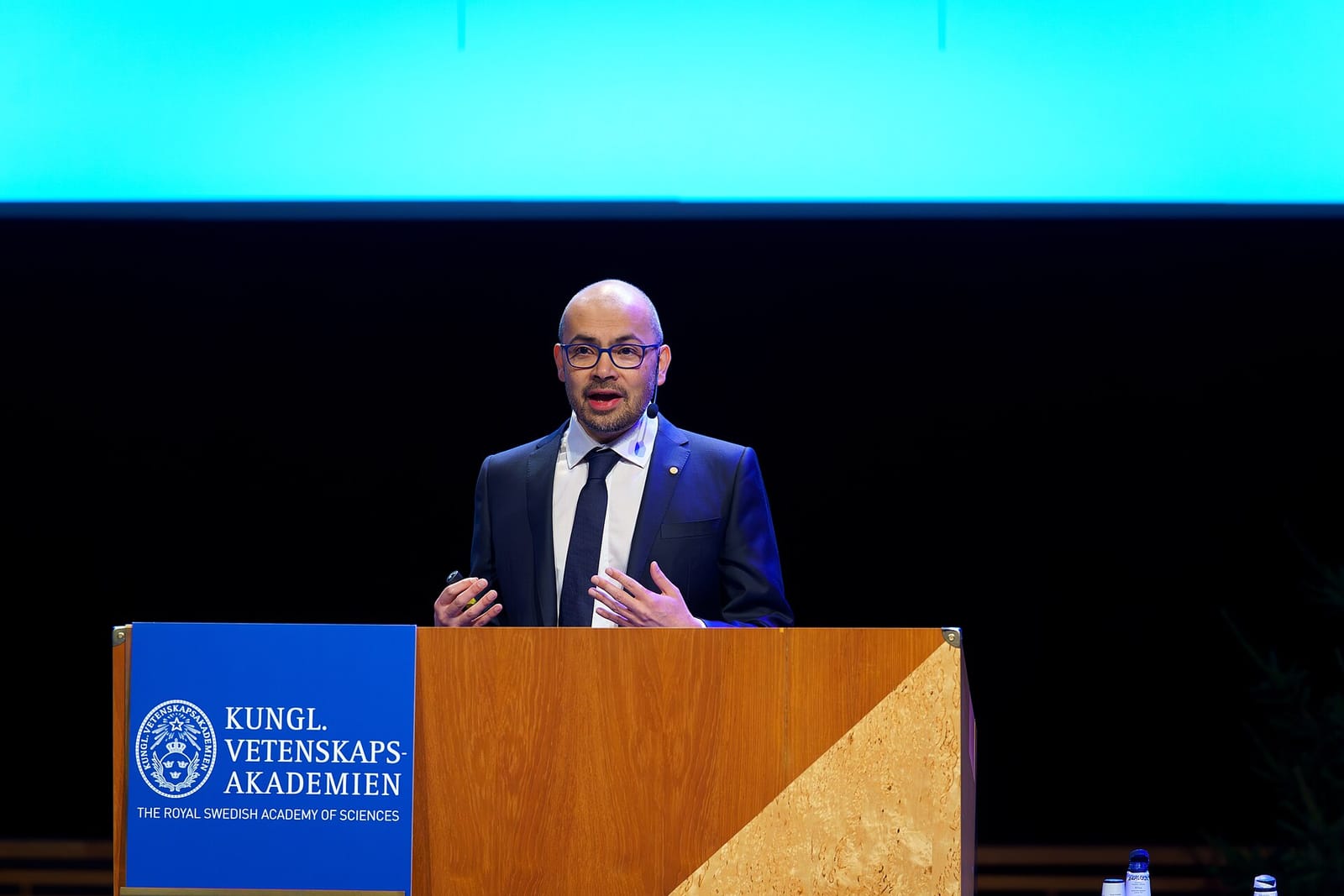
Demis Hassabis has had several careers that each could have defined a life: chess prodigy, video game designer, neuroscientist and the leader of one of the world’s most important AI labs. In 2024 he shared the Nobel Prize in Chemistry for AlphaFold.
Chess and games
Born in London in 1976, Hassabis was a chess prodigy who reached master level as a teenager. Games shaped his thinking about intelligence: how people plan, learn and make decisions.
As a teenager he worked at the games studio Bullfrog Productions, where he co-designed the simulation game Theme Park, a commercial hit. After studying computer science at the University of Cambridge, he founded his own studio, Elixir Studios, which produced titles such as Republic: The Revolution and Evil Genius.
Neuroscience
Wanting to understand intelligence more deeply, Hassabis earned a PhD in cognitive neuroscience at University College London in 2009. His research on memory and imagination — showing that patients with damage to the hippocampus struggled to imagine new experiences — was widely cited and linked memory with the ability to imagine the future.
DeepMind
In 2010 he co-founded DeepMind in London with Shane Legg and Mustafa Suleyman, with the mission of “solving intelligence” and using it to advance science. The company combined deep learning with reinforcement learning:
- DQN learned to play Atari games from pixels;
- Google acquired DeepMind in 2014;
- AlphaGo defeated Lee Sedol at Go in 2016, a landmark moment for AI;
- AlphaZero mastered chess, shogi and Go through self-play.
See our Google DeepMind company profile.
AlphaFold and the Nobel Prize
Hassabis pushed DeepMind toward scientific problems. AlphaFold 2 effectively solved protein structure prediction in the CASP14 assessment in 2020, and DeepMind released predicted structures for over 200 million proteins with EMBL-EBI. In 2024, Hassabis and John Jumper shared the Nobel Prize in Chemistry with David Baker for computational protein structure prediction and design. He was also knighted in the United Kingdom for services to AI.
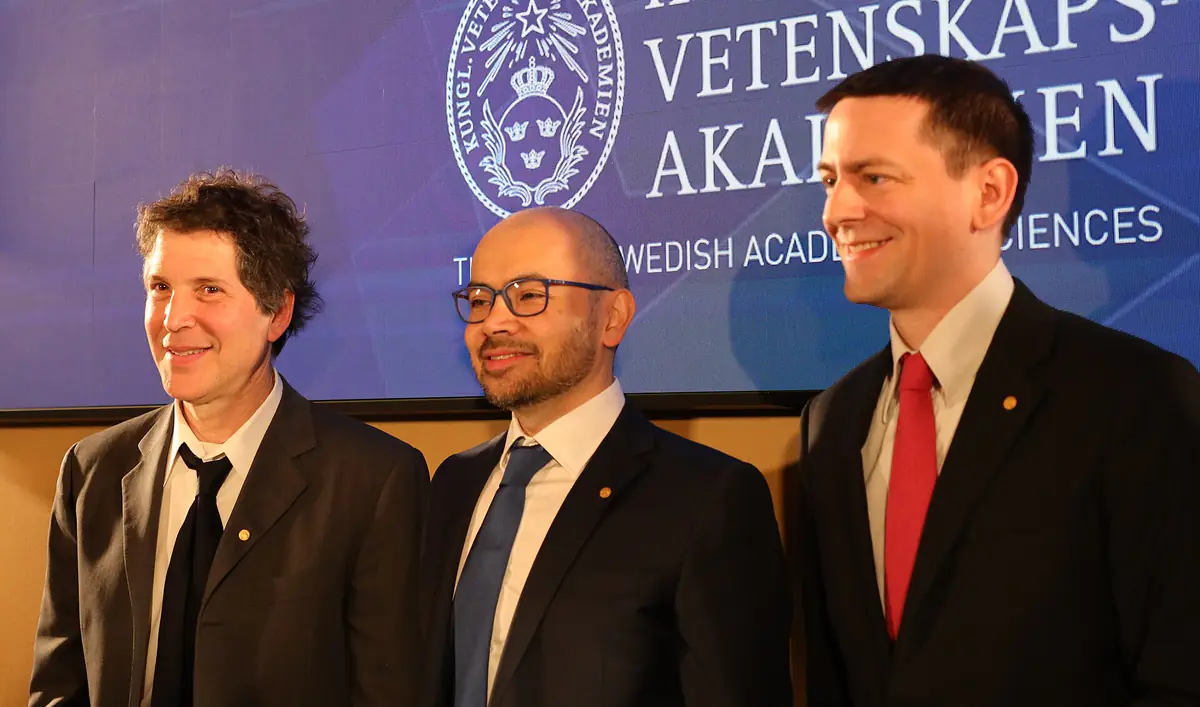
In 2021 Alphabet launched Isomorphic Labs, led by Hassabis, to apply these methods to drug discovery — see AI in drug discovery.
Google DeepMind
In 2023, Google merged DeepMind with its Google Brain team into Google DeepMind, with Hassabis as CEO. The combined organization develops the Gemini models behind Google’s AI products, alongside its science and safety research.
Views
Hassabis has argued that AGI could arrive within years to a decade, that it could transform science and medicine, and that its risks require careful, scientific approaches to safety and international cooperation. He often describes AI as the ultimate tool for scientific discovery.
A career built on one question
Looking back, Hassabis’s path follows a single thread: understanding intelligence and using it to accelerate discovery. Games taught him about planning and learning; neuroscience showed how the brain builds memories and imagines the future; DeepMind combined those ideas with machine learning; and AlphaFold showed what AI can do for science.
Timeline at a glance
- 1976: born in London.
- 1990s: chess prodigy; co-designs Theme Park at Bullfrog.
- 1998: founds Elixir Studios.
- 2009: PhD in cognitive neuroscience at UCL.
- 2010: co-founds DeepMind.
- 2014: Google acquires DeepMind.
- 2016: AlphaGo defeats Lee Sedol.
- 2020: AlphaFold 2 at CASP14.
- 2023: becomes CEO of Google DeepMind.
- 2024: Nobel Prize in Chemistry.
Related reading
See the godfathers of deep learning for the other Nobel-recognized pioneers of modern AI.
What to watch next
- New Gemini model generations from Google DeepMind.
- Isomorphic Labs’ drug candidates moving toward clinical trials.
- AI-for-science breakthroughs in materials, weather and mathematics.
- Hassabis’s public positions on AGI timelines and safety.
Key takeaways
- Hassabis was a chess prodigy and co-designed the game Theme Park as a teenager.
- He earned a PhD in cognitive neuroscience at UCL in 2009.
- He co-founded DeepMind in 2010; Google acquired it in 2014.
- AlphaFold earned him a share of the 2024 Nobel Prize in Chemistry.
- He leads Google DeepMind, which develops the Gemini models.
Frequently asked questions
Why did Demis Hassabis win a Nobel Prize?
He shared the 2024 Nobel Prize in Chemistry with John Jumper and David Baker for AI-based protein structure prediction (AlphaFold) and protein design.
What is Isomorphic Labs?
An Alphabet company led by Hassabis, launched in 2021 to apply AI to drug discovery.
Did Hassabis design video games?
Yes. He co-designed Theme Park at Bullfrog Productions and later founded Elixir Studios.