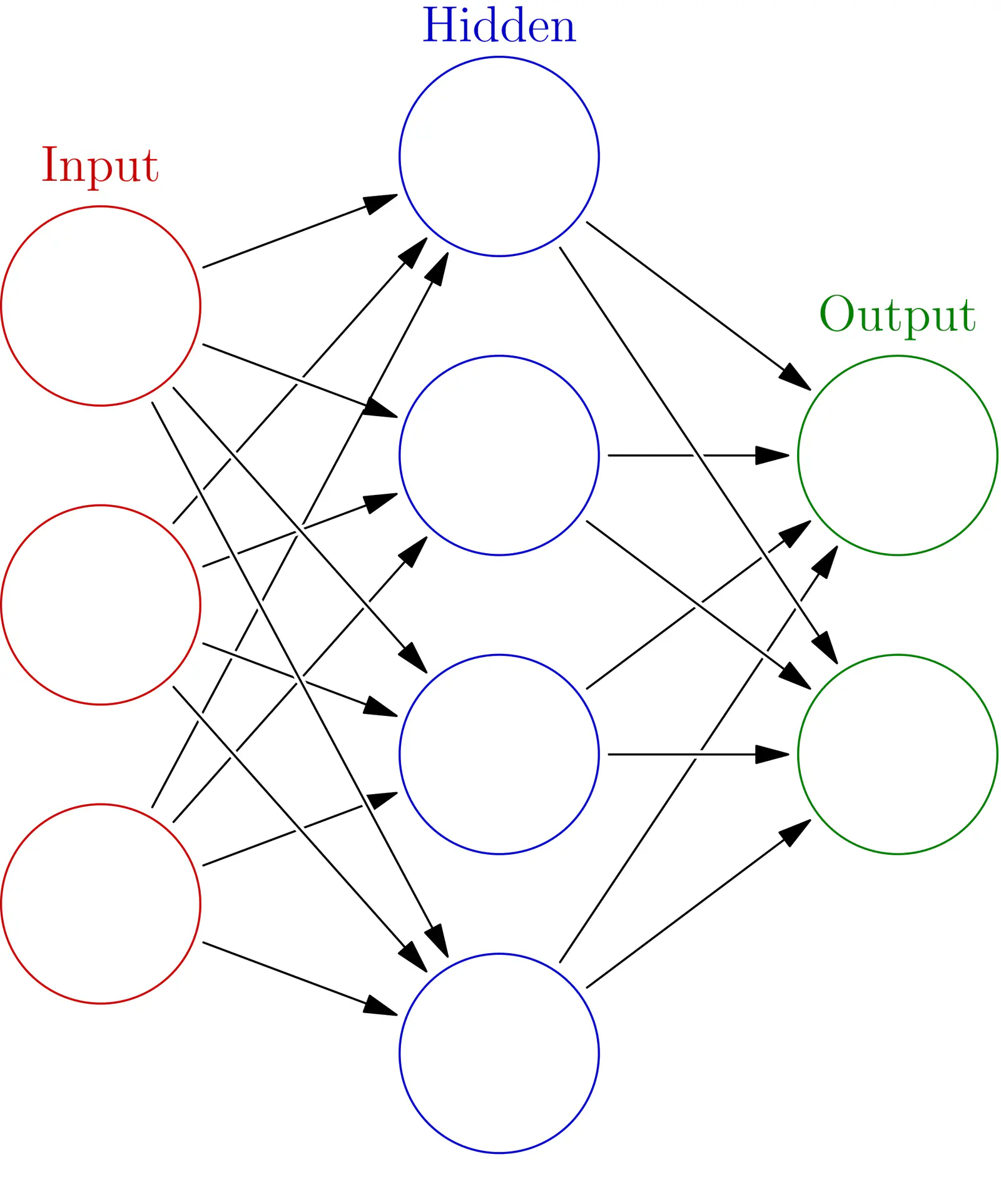
If you can follow a neural network’s diagrams but lose the thread at “gradient” or “backpropagation,” the gap is usually a few pieces of math, and seven free videos cover them in a sensible order. This list goes from vectors and matrices to gradient descent, then to backpropagation, and ends with a video where you build a tiny neural network engine in code. We checked that each link points to the video named; we describe each one at the level of its title and well-known subject, without claiming it is the only good explanation. Our earlier list of six videos on how large language models work covers the next step after this one.
1. Vectors (3Blue1Brown, Essence of linear algebra, chapter 1)
Start with the idea that a vector can be an arrow, a list of numbers or something more general, and that adding and scaling vectors are the two basic moves. Neural networks are made of exactly these operations at large scale: inputs, weights and outputs are all vectors. Who it suits: anyone with no linear algebra background. Watch for: the link between the geometric and numeric views, which makes later chapters easier to picture.
2. Linear transformations and matrices (3Blue1Brown, chapter 3)
This chapter shows a matrix as a transformation of space rather than a grid of numbers to memorize. That view explains why one layer of a network can be written as a matrix multiplication and why stacking layers composes transformations. Who it suits: learners about to read any article that writes a layer as a weight matrix times an input. Watch for: how the columns of a matrix show where the basic directions land.
3. Gradient descent, how neural networks learn (3Blue1Brown, Deep Learning chapter 2)
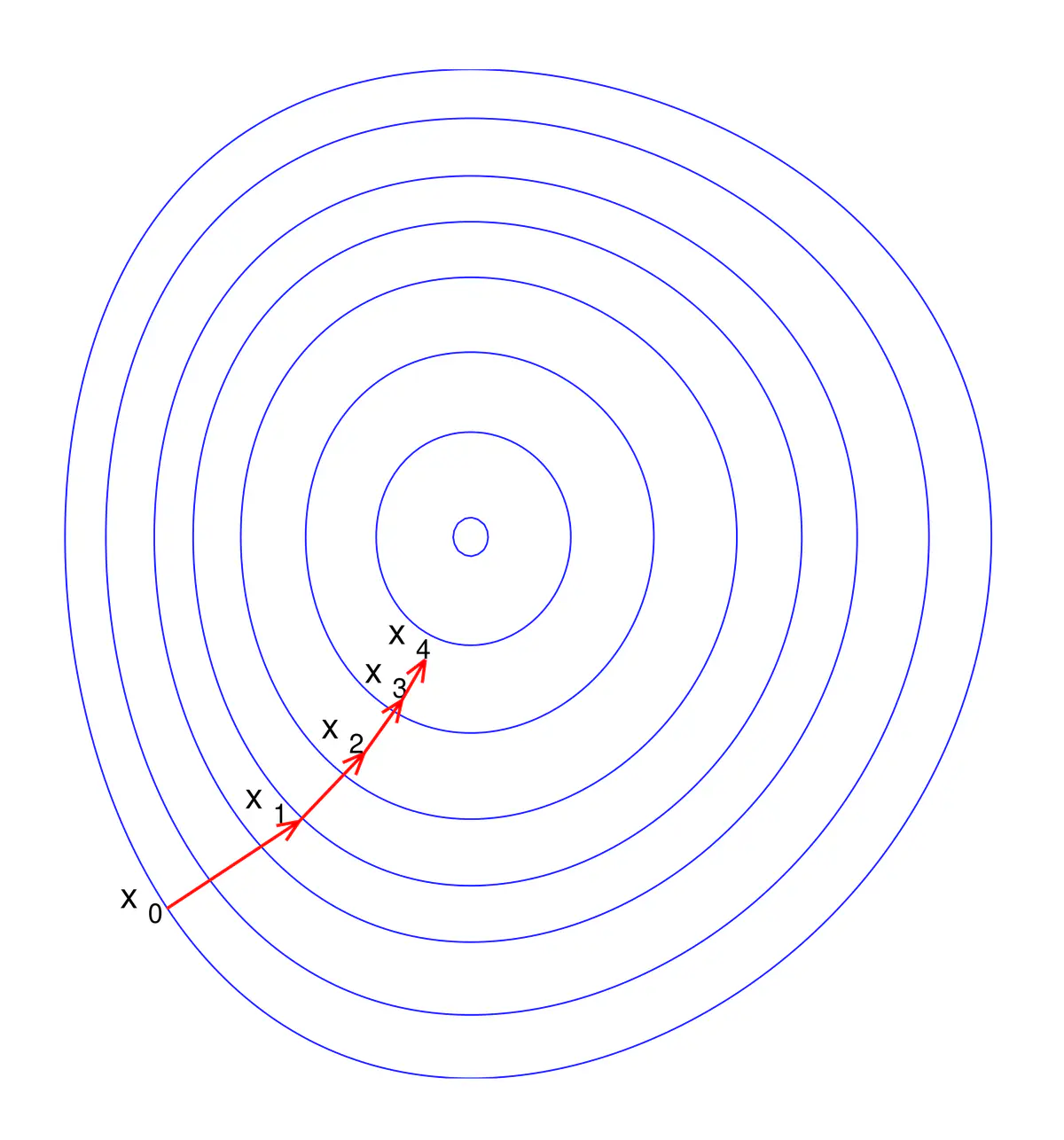
Here the series defines a cost function and shows how a network improves by taking small steps downhill on it. Gradient descent is the learning rule behind most modern training, so the picture of a landscape with a downhill direction is worth getting right. Who it suits: anyone who has heard that “the model minimizes a loss” and wants to see what that means. Watch for: why the step size matters and why training can get stuck.
4. Backpropagation, intuitively (3Blue1Brown, Deep Learning chapter 3)
This video explains, without heavy notation, how the error at the output is traced back to decide which weights to nudge and in which direction. Treat it as the picture before the equations. Who it suits: people who find the formula intimidating and want the idea first. Watch for: the notion that each weight gets a share of the blame proportional to its influence.
5. Backpropagation calculus (3Blue1Brown, Deep Learning chapter 4)
The same story with the chain rule written out. It is the video to watch with a pencil. If you want a written companion with numbers, our worked example of backpropagation and the chain rule follows the same path in text. Who it suits: readers comfortable with basic derivatives. Watch for: how the derivative of a composition becomes a product of simple derivatives.
6. The Essential Main Ideas of Neural Networks (StatQuest with Josh Starmer)
A different teaching style: StatQuest breaks ideas into small, labeled steps, which helps if the 3Blue1Brown pace feels fast. Use it as a second explanation of what the parts of a network do and how they fit together. Who it suits: beginners who learn best from short, repeated steps. Watch for: how the pieces of a network fit together before any equations appear.
7. Building micrograd (Andrej Karpathy)
The final step is to build it yourself. Karpathy’s video constructs a small neural network library from scratch and implements backpropagation in code, so the math from videos 3 to 5 becomes something you can run. Who it suits: anyone who can read basic Python. Watch for: how each operation records how to pass its gradient backward, which is the whole idea of automatic differentiation. We profile the author in Andrej Karpathy: who he is and what he teaches.
A suggested plan
For a two-week plan, watch videos 1 and 2 in the first three days, 3 to 5 in the next five, and 6 and 7 in the second week. Pause often. After each video, write the main idea in two sentences without looking; if you cannot, rewatch the section you skipped. Pair video 5 with our softmax and cross-entropy explainer to see how the loss in a language model is defined.
What to watch next
- The transformer and attention videos in our language model list.
- More channel suggestions in our guide to YouTube channels for learning AI.
- Karpathy’s follow-on video on building a GPT tokenizer, once you are comfortable with micrograd.
Key takeaways
- Neural network math comes down to vectors, matrices, derivatives and the chain rule.
- Watch in order: linear algebra, gradient descent, backpropagation, then code.
- Use a second teacher, such as StatQuest, when one explanation does not click.
- Building micrograd turns the math into something you can run.
Frequently asked questions
Do I need calculus to understand neural networks?
Basic derivatives and the chain rule are enough to follow backpropagation. The calculus video on this list explains them in context.
Which video should I watch first?
Start with the vectors video if linear algebra is new to you. If you already know it, begin with the gradient descent video.
Are these videos free?
Yes, all seven are publicly available on YouTube at the time of writing, though availability can change.