As AI drives a wave of data center construction, one number appears in almost every sustainability report: PUE, or power usage effectiveness. It is simple, widely used and often misunderstood. Here is what it measures, what good looks like and what it leaves out.
The definition
PUE compares the total energy used by a data center facility with the energy used by its IT equipment:
PUE = total facility energy ÷ IT equipment energy
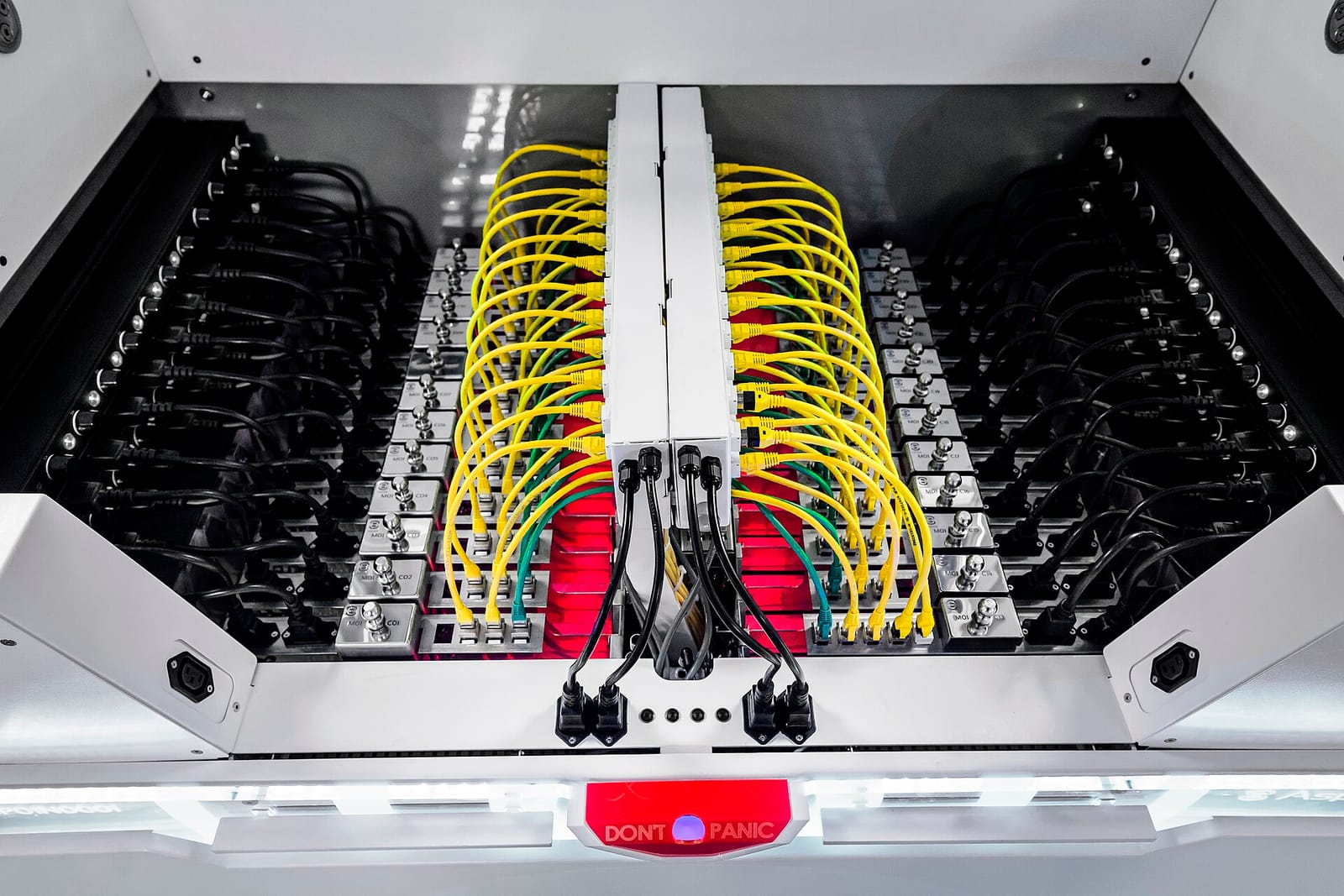
IT equipment means servers, storage and network gear. Total facility energy adds everything else: cooling, power conversion and distribution losses, lighting and building systems.
- A PUE of 2.0 means that for every kilowatt-hour used by computers, another kilowatt-hour goes to overhead.
- A PUE of 1.2 means only 0.2 kWh of overhead per kWh of IT load.
- The theoretical ideal is 1.0: all energy goes to computing.
PUE was introduced by The Green Grid industry consortium in the late 2000s and later standardized internationally.
What good values look like
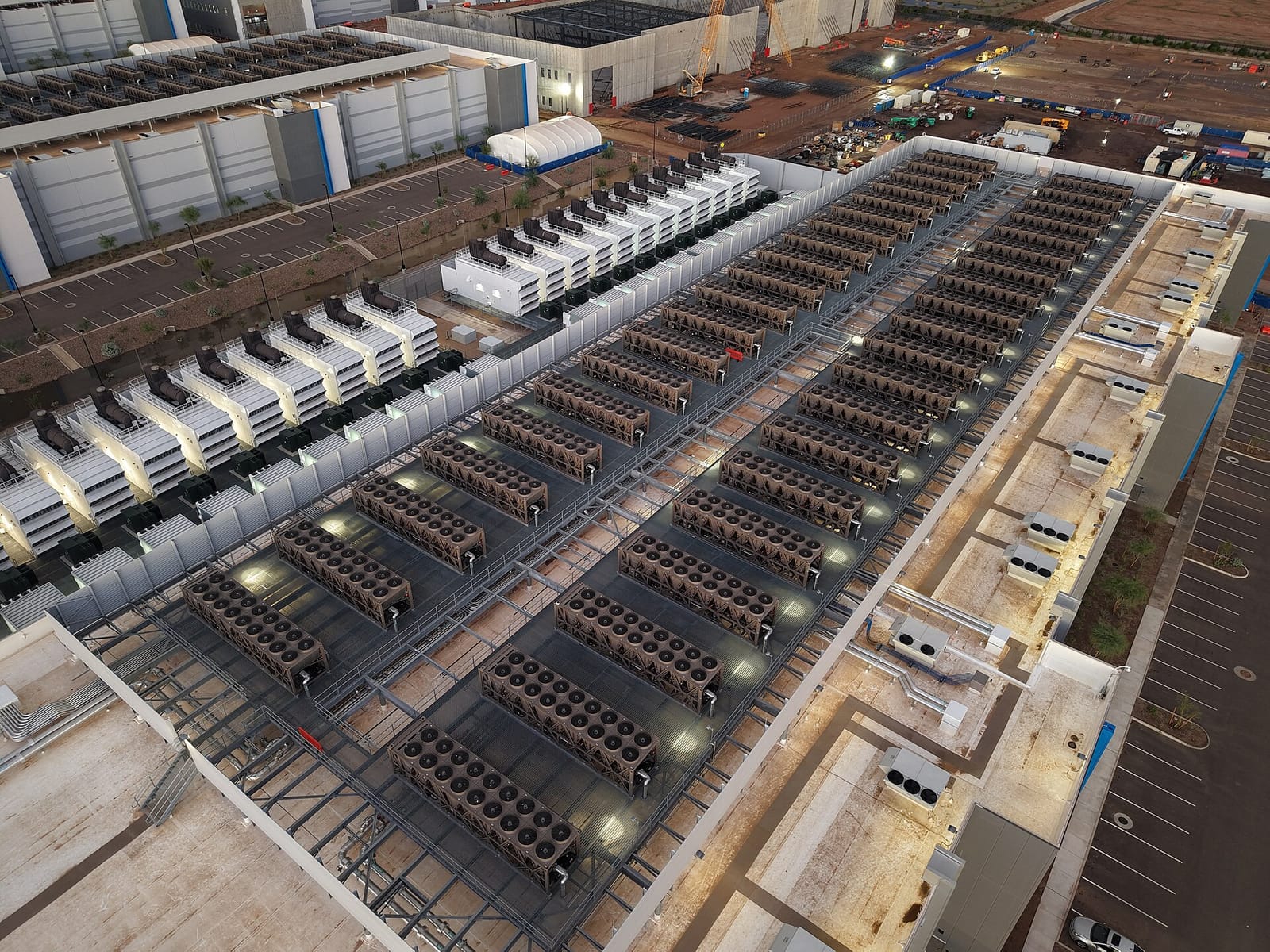
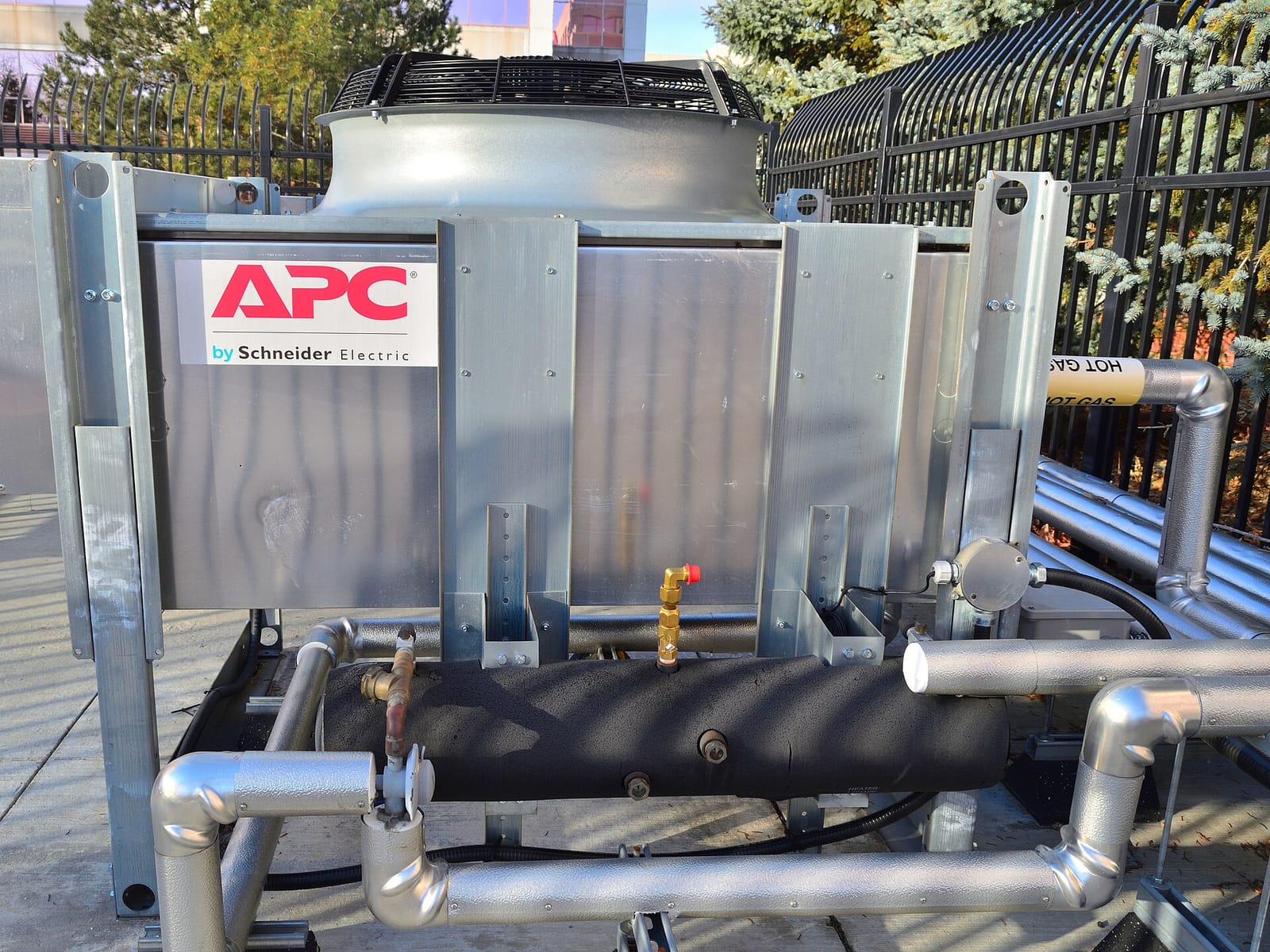
Older or smaller facilities often operate well above 1.5. Large modern hyperscale data centers report annual averages close to 1.1–1.2, achieved with efficient cooling designs, free cooling with outside air or water where the climate allows, high-efficiency power equipment and careful airflow management. Industry surveys show average PUE improved substantially in the 2010s and has improved more slowly since.
What moves PUE
- Climate: cool locations allow free cooling for much of the year.
- Cooling technology: liquid cooling for dense AI racks removes heat more efficiently than air — see liquid cooling explained.
- Utilization: fixed overheads weigh more when IT load is low, so lightly used facilities look worse.
- Power chain: transformers, uninterruptible power supplies and conversions all lose energy.
- Measurement choices: annual versus peak values, and where the boundary of “IT energy” is drawn.
What PUE does not tell you
PUE measures facility overhead, not how useful the computing is or how clean the energy is:
- A data center with a perfect PUE running inefficient software still wastes energy.
- PUE says nothing about the carbon intensity of the electricity; a facility on a coal-heavy grid can have an excellent PUE.
- It ignores water use, measured separately with metrics such as water usage effectiveness (WUE).
- It does not capture embodied emissions from building facilities and manufacturing chips.
- Some efficiency measures (like evaporative cooling) lower PUE while raising water consumption.
For AI specifically, efficiency per useful task — energy per trained model or per thousand tokens served — is increasingly important, alongside facility metrics.
Why it matters now
The International Energy Agency projects data center electricity demand could roughly double by 2030, driven mainly by AI. At that scale, the difference between a PUE of 1.5 and 1.15 represents large amounts of electricity. Regulators, especially in Europe, are increasingly requiring data centers to report energy and efficiency indicators, including PUE. See how much energy AI uses.
A worked example
A facility uses 12 GWh of electricity in a year. Its servers, storage and network equipment account for 10 GWh. Its PUE is 12 ÷ 10 = 1.2: for every unit of energy used by IT, 0.2 units go to cooling, power conversion and other overhead. If upgrading to liquid cooling cut overhead to 1 GWh, PUE would fall to 1.1 — saving 1 GWh a year at the same computing load.
What to watch next
- Mandatory efficiency reporting for data centers in the EU and elsewhere.
- Liquid cooling becoming standard for AI halls.
- Metrics for energy per AI task, not just facility overhead.
- Heat reuse projects that turn waste heat into a resource.
Key takeaways
- PUE = total facility energy divided by IT equipment energy; 1.0 is the ideal.
- Modern hyperscale data centers report averages around 1.1–1.2.
- Climate, cooling technology, utilization and the power chain drive PUE.
- PUE ignores carbon intensity, water use and how useful the computing is.
- As AI grows, efficiency per task and clean energy matter as much as PUE.
Frequently asked questions
Is a lower PUE always better?
Lower overhead is better, but a low PUE can hide high water use or dirty electricity, so look at other metrics too.
Can PUE be below 1.0?
Not by its definition. Some operators credit reused waste heat separately, but standard PUE cannot go below 1.0.
Who invented PUE?
It was introduced by The Green Grid industry consortium and later became an international standard.