Nvidia on Monday, November 16, announced Rubin HPC, a new GPU in its Vera Rubin family built for scientific simulation rather than AI training, with more than 50,000 CUDA cores on a single chip. Unveiled at the SC26 supercomputing conference in Chicago, it headlines a set of science-focused launches: a rack-scale system built only from Nvidia’s Vera CPUs, a four-node DGX Spark developer kit for researchers’ desks, and an open model bundle called Nemotron for Science. The announcements came a day before Nvidia’s quarterly results and in the middle of the leadership crisis that followed Jensen Huang’s resignation.
Rubin HPC: more cores, more data movement
Nvidia says Rubin HPC has “a record number of CUDA cores,” more than 50,000, plus a sparse data acceleration feature and seventh-generation NVLink for GPU-to-GPU connections. For comparison, SiliconANGLE notes that Nvidia’s flagship Rubin GPU, designed mainly for large language models, has more than 28,000 CUDA cores alongside 898 Tensor cores.
The design choice reflects what scientific codes need. Nvidia’s announcement describes a common pattern in climate models, engineering simulations, genomics and financial risk: a program reaches into a huge dataset, gathers a few scattered values, computes and repeats. That workload is limited less by raw math throughput than by how fast data reaches the cores, so Nvidia says Rubin HPC scales data movement and compute together. Sparse data acceleration targets datasets full of zeros, which are common in physics and biology.
SiliconANGLE reports that Rubin HPC is expected to ship in 2028. Nvidia did not publish performance figures, memory capacity or pricing.
A CPU-only rack for codes that are not GPU-ready
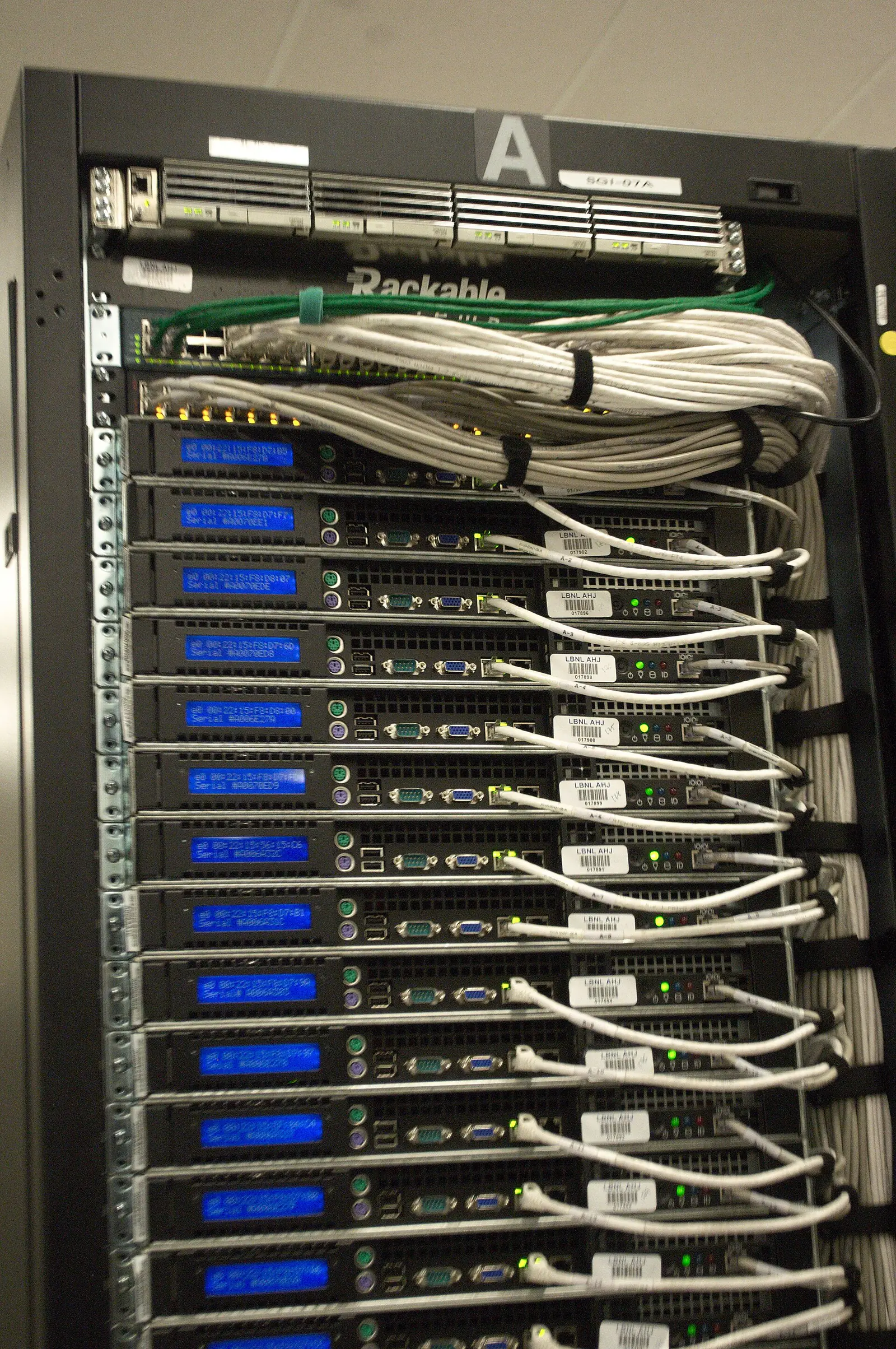
Much scientific software still runs on CPUs. For those workloads Nvidia announced a Vera CPU rack-scale platform: 192 Vera CPUs, about 300 TB of memory and 1 petabyte of storage in a liquid-cooled rack connected by Quantum-X800 InfiniBand. Each Vera chip has 88 custom Olympus cores and up to 1.2 TB/s of memory bandwidth, and the rack reuses chassis, power and cooling parts from Nvidia’s NVL72 GPU racks.
In Nvidia’s own tests, Vera delivered 1.9 times the performance and 2.4 times the performance per watt of x86 systems on an OpenFOAM airflow simulation. These are vendor numbers and have not been independently verified. The German Climate Computing Center (DKRZ) has picked Vera CPUs for its HLRE-5 supercomputer, built by Bull and expected in early 2028. Vera racks are due from Dell, HPE, Lenovo and Supermicro from early 2027. Nvidia also released HPC SDK 26.11 and a public beta of a new Fortran compiler.
From the desk to the data center
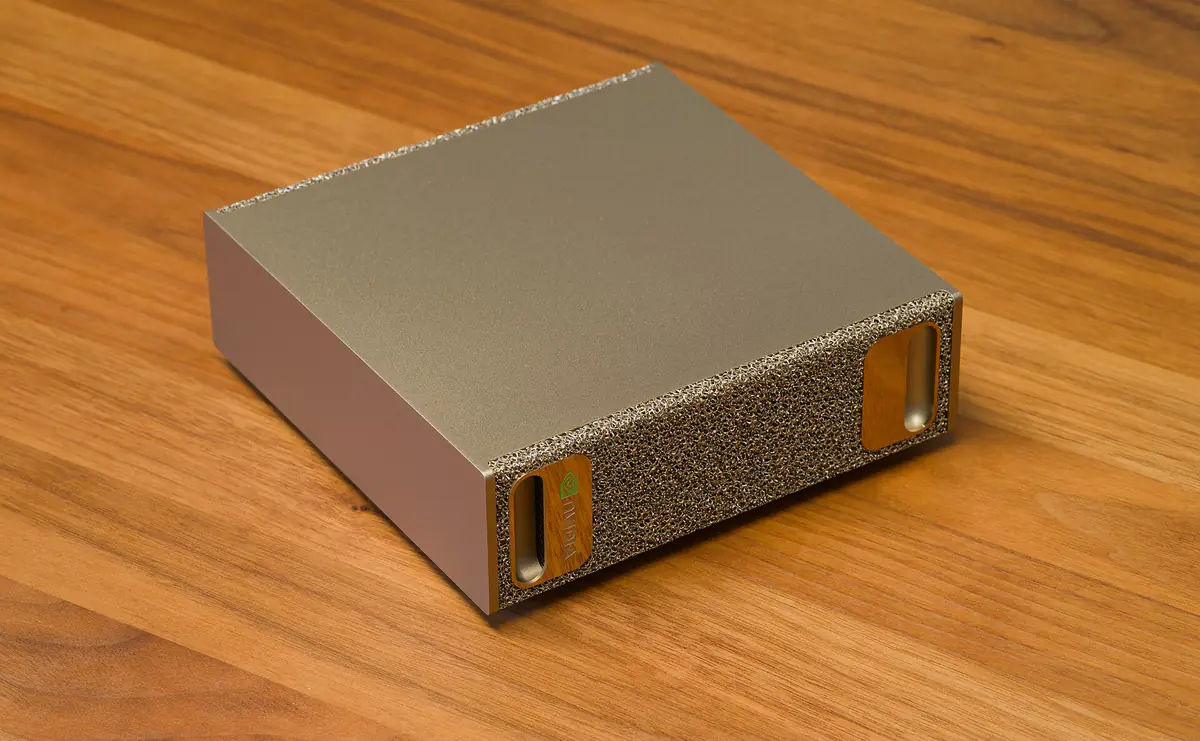
At the small end, the DGX Spark HPC Developer Kit links four DGX Spark desktop systems in a ring over ConnectX-7 networking, with no switch. Nvidia says the four nodes provide 512 GB of combined memory and 20 TB of NVMe storage, enough to run models of up to 700 billion parameters in the NVFP4 format. The kit is on sale now through partners including Acer, ASUS, Dell, HP, Lenovo and MSI, with an HPC SDK playbook “coming soon.”
On the software side, Nemotron for Science packages the open Nemotron 3.5 Super VL model with post-training recipes and LitmusBench v0.2, an open dataset of nearly 50,000 chemistry questions. Nvidia says partners such as Lila Sciences, Terray Therapeutics and Therna have post-trained the model for lab protocols, reaction extraction and mRNA design. Nvidia also announced a quantum-classical codesign platform with IBM and Fermilab.
Why Nvidia is pitching “agents for science”
Every launch was framed around AI agents that propose ideas and then run simulations to test them. The logic is commercial as much as scientific: if agents multiply the number of candidate molecules or designs that need checking, demand for simulation hardware grows alongside demand for AI chips. It also gives Nvidia a story beyond large language model training at a moment when investors are watching closely. We covered the earlier Vera rollout in Oracle’s multi-gigawatt Vera Rubin deal, and Vera Rubin systems also made their debut in this week’s MLPerf Training and Endpoints results.
What to watch next
- Rubin HPC specifications, including memory and double-precision performance, ahead of its expected 2028 shipments.
- Independent results for Vera CPU racks on real HPC codes once systems reach customers in 2027.
- Which supercomputing centers adopt Rubin HPC or Vera for their next procurements.
- How Nvidia’s interim leadership discusses the science roadmap in its quarterly results.
Key takeaways
- Rubin HPC is a simulation-focused GPU with more than 50,000 CUDA cores, sparse data acceleration and seventh-generation NVLink.
- A Vera CPU rack combines 192 CPUs and about 300 TB of memory; DKRZ will use Vera in its HLRE-5 system.
- A four-node DGX Spark kit gives researchers 512 GB of memory at their desk.
- Nemotron for Science adds an open chemistry dataset and post-training recipes for science agents.
- Nvidia’s performance claims are its own and await independent testing.
Frequently asked questions
What is Nvidia Rubin HPC?
Rubin HPC is a GPU in Nvidia’s Vera Rubin platform designed for scientific simulation and data analytics. It has more than 50,000 CUDA cores and is expected to ship in 2028.
How is Rubin HPC different from the regular Rubin GPU?
The flagship Rubin GPU is optimized for AI with Tensor cores, while Rubin HPC trades toward many more CUDA cores and faster data movement for simulation workloads.
Can researchers buy the DGX Spark HPC Developer Kit now?
Yes. Nvidia says the four-node kit is available for sale through partners and the NVIDIA Marketplace, with an HPC SDK playbook to follow.