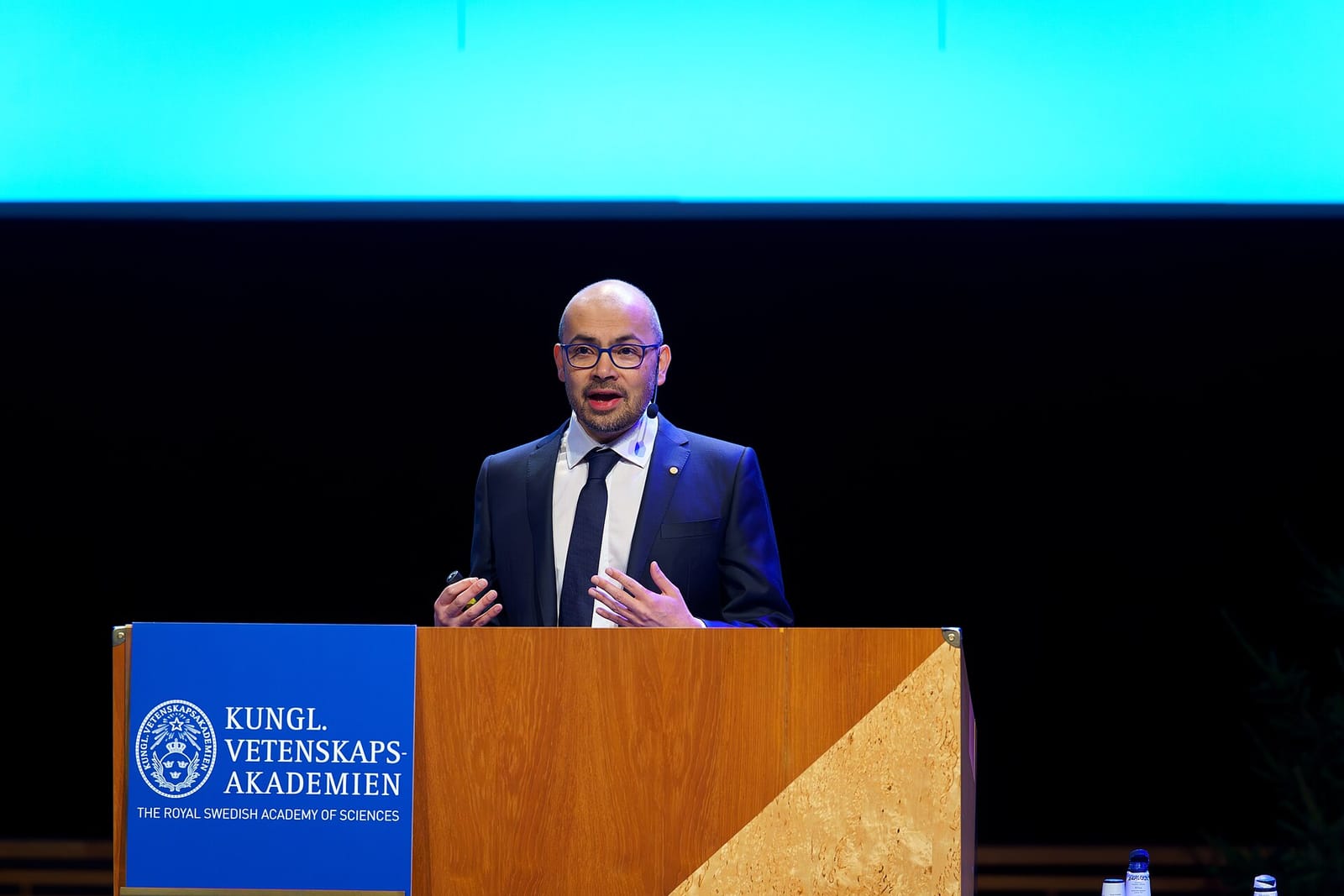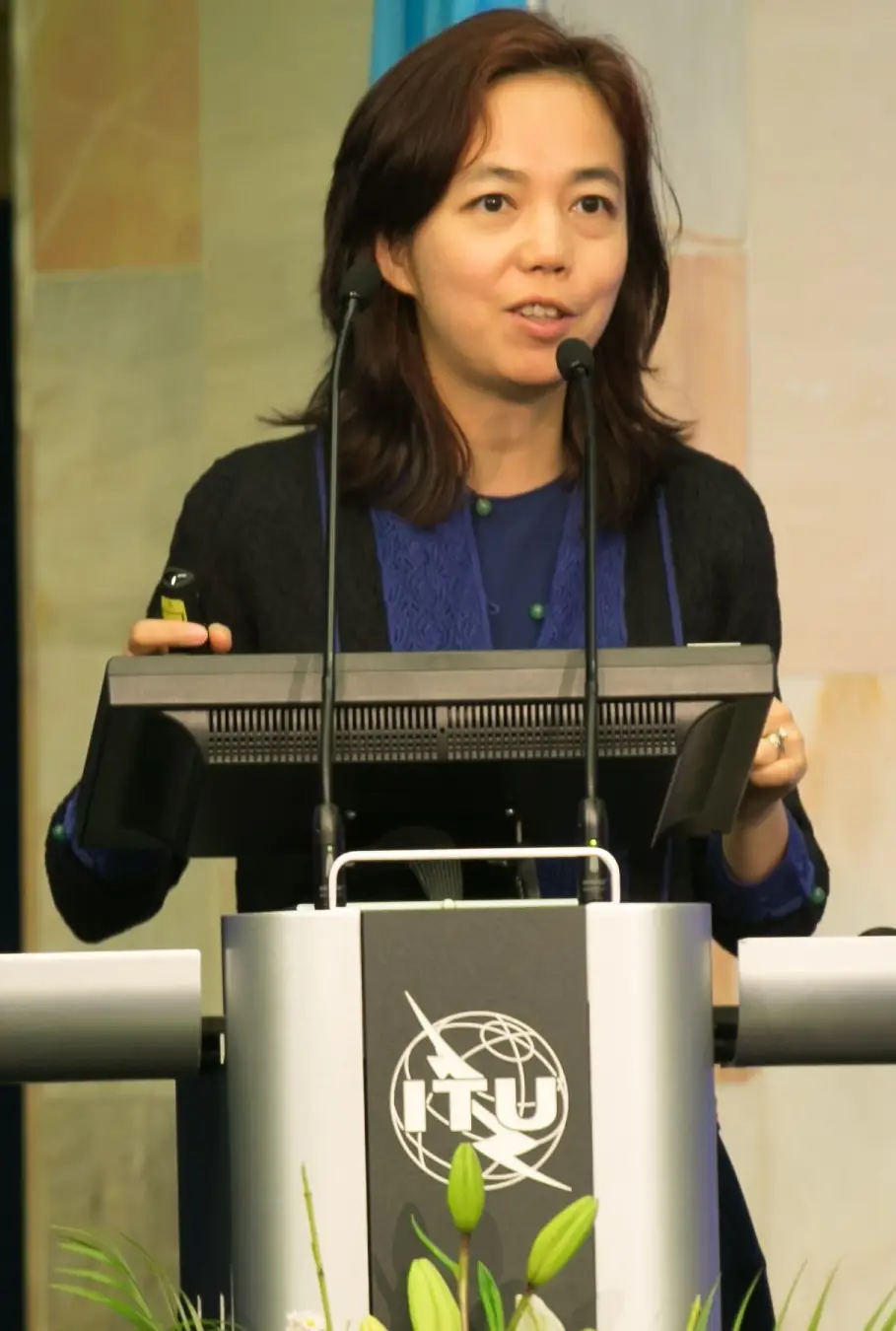
Fei-Fei Li is a computer scientist at Stanford University best known for ImageNet, the large labeled image dataset that helped set off the deep learning boom in computer vision. She later co-founded Stanford’s Institute for Human-Centered AI and, in 2024, started the company World Labs, which works on what she calls spatial intelligence. This profile covers her path, the work she is credited with and what to look for in her current projects. It relies on public biographical records and does not draw on any interview with her.
From Beijing to Princeton and Caltech
Li was born on July 3, 1976, in Beijing and grew up in Chengdu. At 16 she moved to Parsippany, New Jersey, to join her father, who had emigrated four years earlier. She graduated from Parsippany High School in 1995, then studied physics at Princeton, earning her bachelor’s degree in 1999. At Caltech she completed a master’s degree in electrical engineering in 2001 and a doctorate in 2005, with Pietro Perona as her adviser and Christof Koch as secondary supervisor. Her graduate work was supported by a National Science Foundation fellowship and a Paul and Daisy Soros Fellowship.
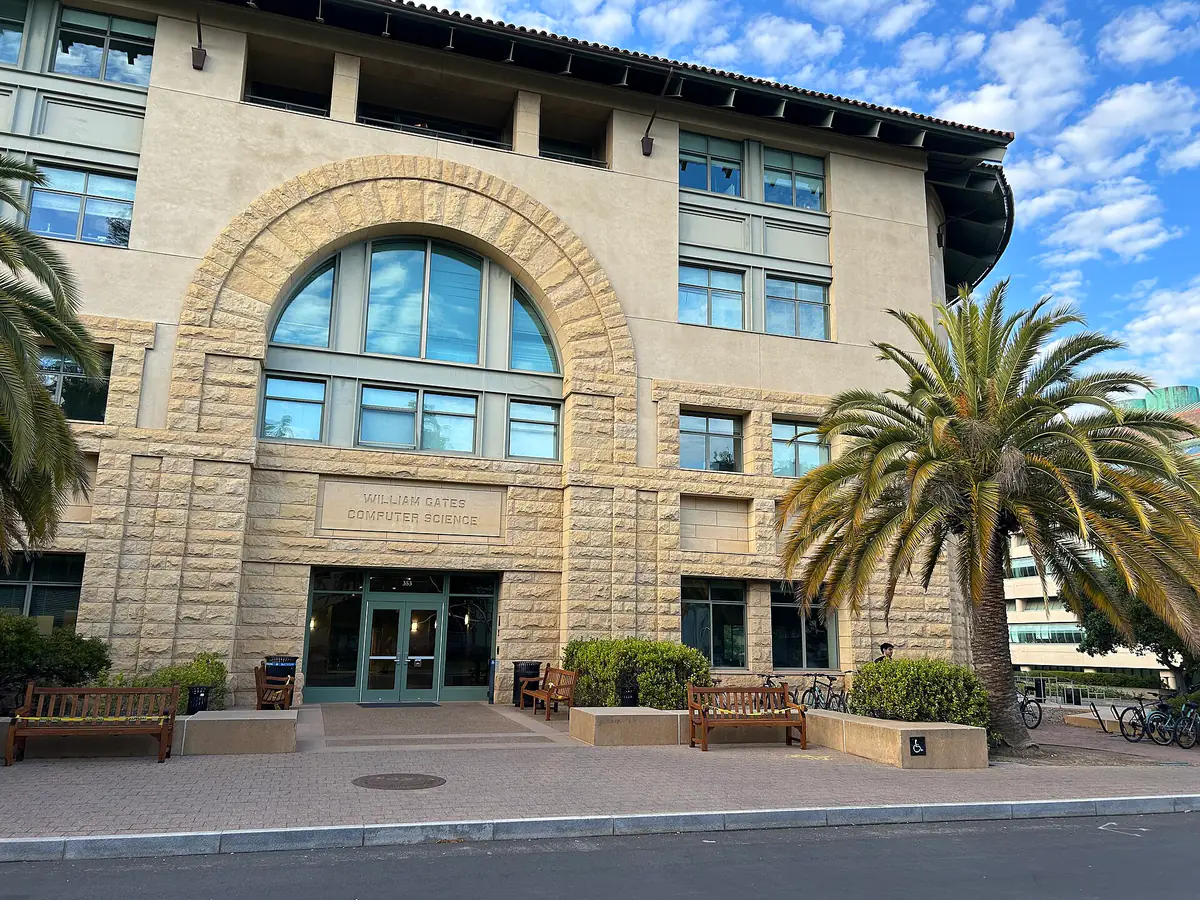
After Caltech she held assistant professorships at the University of Illinois Urbana-Champaign (2005–2006) and Princeton (2007–2009) before joining Stanford in 2009. She became a tenured associate professor in 2012 and a full professor in 2018, and she directed the Stanford Artificial Intelligence Laboratory from 2013 to 2018.
ImageNet: the dataset that changed vision research
At Princeton in 2007, Li began building ImageNet, motivated by the idea that vision systems needed far more labeled examples than researchers then used. The project drew on an estimate of roughly 30,000 object categories that people can recognize. Using Amazon Mechanical Turk for labeling, the team assembled more than 14 million images across about 22,000 categories. Li also led the ImageNet Large Scale Visual Recognition Challenge from 2010 to 2017, an annual competition that became the standard yardstick for image classification.
The challenge is remembered mostly for what happened in 2012, when a deep convolutional network cut the error rate sharply and pulled the field toward neural networks. The same data-first logic carried into later work such as the Vision Transformer, which was pretrained on large image collections. The lesson Li drew, that scale and data quality can matter as much as clever algorithms, remains a theme of the field, as the training data debates around language models show.
Google Cloud and the push for human-centered AI
From January 2017 until fall 2018, Li took leave from Stanford to serve as chief scientist of AI and machine learning at Google Cloud, where her team worked on making AI tools more accessible to businesses, including AutoML. She returned to Stanford and, with philosopher John Etchemendy, co-founded the Institute for Human-Centered AI (HAI), where she is a co-director. HAI combines technical research with work on policy, ethics and the effects of AI on society. In 2017 she also co-founded AI4ALL, a nonprofit aimed at widening who gets to work in AI.
Her public service includes a 2023 appointment to the UN Secretary-General’s Scientific Advisory Board. Honors listed in public records include election to the National Academy of Engineering and the National Academy of Medicine in 2020, the American Academy of Arts and Sciences in 2021 and a share of the 2025 Queen Elizabeth Prize for Engineering.
World Labs and spatial intelligence
In 2024 Li co-founded World Labs with Justin Johnson, Christoph Lassner and Ben Mildenhall, and serves as chief executive. The company focuses on spatial intelligence: AI that perceives, generates and reasons about three-dimensional environments, rather than only text or flat images. Its product Marble creates 3D environments. Public reporting put World Labs’ 2024 funding at $230 million. We have not verified later financing or ownership claims that appear on some reference pages, so we do not repeat them here.
The idea connects to a broader industry shift toward world models, which simulate environments, as in recent systems we covered such as Genie 4 from Google DeepMind.
How her work compares with other AI figures
Where Andrej Karpathy is associated with teaching and building end-to-end systems and Demis Hassabis with game-playing and scientific discovery, Li’s signature is infrastructure for the field itself: datasets, benchmarks and institutions. That makes her influence easy to underestimate, because benchmarks shape which research is rewarded.
What to watch next
- Whether spatial-intelligence products such as Marble find paying users beyond demos.
- How World Labs describes its models, data sources and licensing as it grows.
- Stanford HAI’s annual AI Index and policy briefs, which Li’s institute continues to publish.
- Progress on benchmarks for 3D understanding, which are less mature than image classification.
Key takeaways
- Li led the creation of ImageNet: more than 14 million labeled images in about 22,000 categories.
- She directed the ImageNet challenge from 2010 to 2017, which became vision’s main yardstick.
- She co-founded Stanford HAI and AI4ALL, mixing research with policy and inclusion work.
- World Labs, founded in 2024, targets spatial intelligence and 3D world generation.
- Treat unverified financing claims about World Labs with caution until companies confirm them.
Frequently asked questions
What is Fei-Fei Li known for?
She led ImageNet, the large labeled image dataset and challenge that helped drive the deep learning boom in computer vision, and she co-founded Stanford’s Institute for Human-Centered AI.
What is spatial intelligence?
Li uses the term for AI that understands and generates three-dimensional space, so systems can reason about objects and environments rather than only text or flat pictures.
What is World Labs?
World Labs is a company she co-founded in 2024 with Justin Johnson, Christoph Lassner and Ben Mildenhall. Her role is chief executive, and its product Marble creates 3D environments.