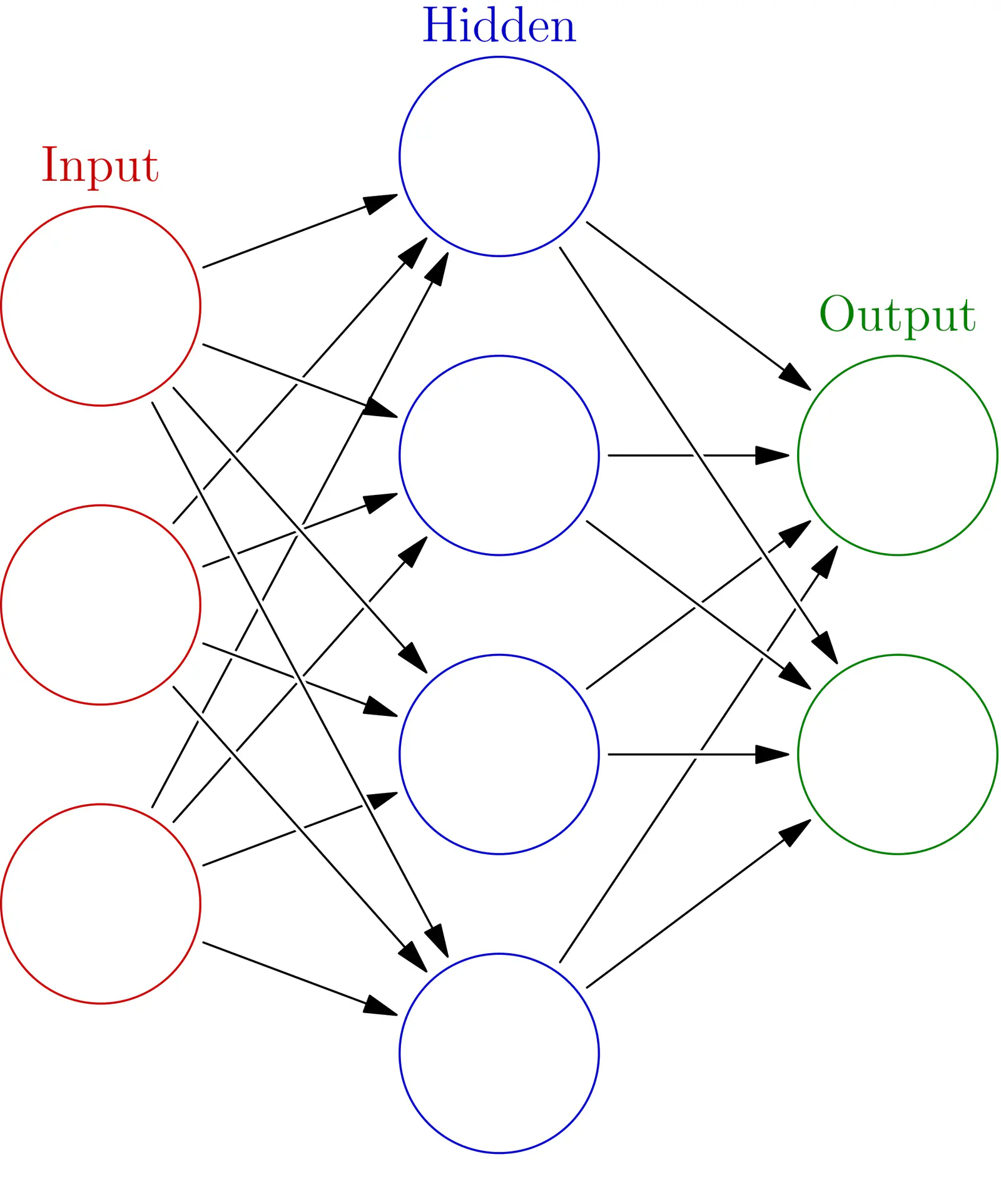
Reinforcement learning (RL), the branch of AI in which an agent learns by trial and error from rewards, sits behind two of the field’s best-known moments: AlphaGo’s 4–1 win over Go champion Lee Sedol in March 2016 and the human-feedback training that turned large language models into chat assistants. This list collects seven free YouTube videos, from a documentary to university lectures and two talks on RLHF, in an order that takes a newcomer from the story to the core ideas and then to how RL shapes today’s chatbots. We confirmed each title, channel and link; we do not quote durations or view counts, which you can check on each page.
None of these videos appear in our earlier lists on how large language models work or the math behind neural networks, so they extend that path rather than repeat it. If you need a one-paragraph definition first, read our glossary entry on reinforcement learning.
1. AlphaGo - The Movie (Google DeepMind)
Best for: anyone, including non-technical viewers, who wants to see why RL matters before learning how it works.
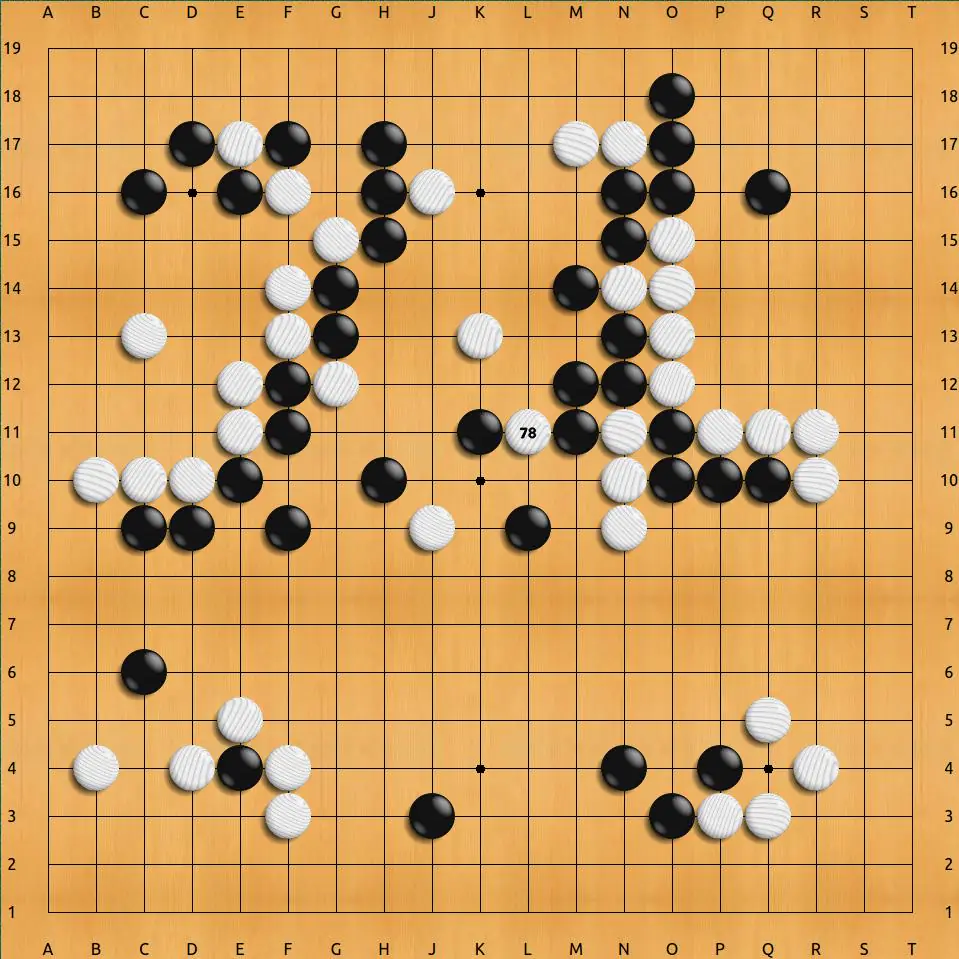
This feature-length documentary, now published in full on Google DeepMind’s channel, follows the team that built AlphaGo and the run-up to the five-game match against Lee Sedol in Seoul. It contains almost no math. What it gives you is motivation and context: a system that learned partly by playing against itself produced moves that surprised professional players, and the film shows how researchers and Go players reacted. Watch it first as the “why”; every later video on this list explains a piece of the “how.”
2. Reinforcement Learning: Machine Learning Meets Control Theory (Steve Brunton)
Best for: viewers with some engineering or science background who want a clear map of the field in one sitting.
Steve Brunton, a professor at the University of Washington, uses his whiteboard-style format to place RL between machine learning and control theory, the engineering discipline of steering systems toward a goal. He introduces the agent, the environment, actions, rewards and the idea of a policy, and he shows how the main families of methods relate to each other. It is an overview, not a derivation, which makes it a good bridge from the documentary to the lectures that follow.
3. Reinforcement Learning, by the Book (Mutual Information)
Best for: self-learners who want a compact, visual tour of the classic textbook ideas.
The Mutual Information channel builds this video around Richard Sutton and Andrew Barto’s Reinforcement Learning: An Introduction, the standard textbook whose second edition the authors make freely available online. The video uses animation to explain the vocabulary that every later source assumes: states, actions, returns, value functions and the trade-off between exploring new options and exploiting known good ones. If the Brunton video gave you the map, this one fills in the textbook definitions.
4. RL Course by David Silver, Lecture 1: Introduction to Reinforcement Learning (Google DeepMind)
Best for: learners ready for a full university lecture and willing to take notes.
David Silver led the research behind AlphaGo, which makes this lecture a natural follow-up to the documentary. It opens his 2015 course at University College London, a ten-lecture series whose slides are still posted on his website and which runs from Markov decision processes and dynamic programming to policy gradients and a final case study on classic games. Lecture 1 sets up the problem: what makes RL different from supervised learning, what a reward signal is, and the roles of policies, value functions and models. Watch the full series if you want a solid grounding; it remains one of the most frequently recommended free RL courses.
5. L1 MDPs, Exact Solution Methods, Max-ent RL (Pieter Abbeel)
Best for: programmers and students who want a faster, more modern route into deep RL.

Pieter Abbeel, a professor at UC Berkeley, recorded the short “Foundations of Deep RL” series on his own channel. This first lecture covers Markov decision processes and the exact methods for solving small ones, value iteration and policy iteration, before introducing maximum-entropy RL, which rewards an agent for keeping its options open. Later lectures in the series move to the deep learning methods used in practice, including policy gradients and PPO. Choose this as an alternative or a companion to Silver’s course if you prefer a quicker pace.
6. Reinforcement Learning from Human Feedback: From Zero to chatGPT (Hugging Face)
Best for: people who know the basics of language models and want to see where RL enters the chatbot pipeline.
This Hugging Face session explains RLHF step by step: start from a pretrained model, collect human comparisons between answers, train a reward model on those preferences and then fine-tune the language model with RL so it scores well. It pairs with Hugging Face’s written explainer, “Illustrating Reinforcement Learning from Human Feedback,” which uses the same structure. This is where the classic ideas from the lectures (policies, rewards, policy optimization) reappear in a new setting.
7. Reinforcement Learning from Human Feedback: Progress and Challenges (John Schulman)
Best for: technically minded viewers who want the view of someone who built these systems.
John Schulman, an OpenAI co-founder and lead author of the PPO algorithm, gave this talk at UC Berkeley. He discusses why RLHF works, what it does and does not fix, and open problems such as getting models to be truthful and to express uncertainty instead of inventing answers. It is the most advanced item here and the best place to finish, because it turns the earlier material into questions researchers are still working on. Our explainers on the InstructGPT paper and PPO are useful reading alongside it.
A suggested watching plan
The list splits into three stages that you can spread over about two weeks of evenings.
| Stage | Videos | What you gain | Suggested time |
|---|---|---|---|
| The story | 1 | Why RL made headlines and what self-play looked like | One evening |
| The core ideas | 2, 3, 4 | Agent, reward, policy, value, exploration | Three or four evenings, with notes |
| The deeper route (optional) | 5, or the rest of Silver’s course | How small problems are solved exactly and how deep RL scales up | One to two weeks |
| RL in chatbots | 6, 7 | How rewards from human preferences shape assistants | Two evenings |
Two tips make the plan work. First, after videos 2 to 4, write down in your own words the difference between a policy and a value function; if you can, you are ready for the RLHF talks. Second, skip stage three if your goal is to understand chatbots rather than to implement RL; the RLHF videos are followable without it.
What to watch next
- The remaining nine lectures of David Silver’s course, especially those on policy gradients and on RL in classic games.
- Newer talks on reinforcement learning with verifiable rewards, the method behind recent reasoning models.
- Lectures on alternatives to RLHF such as Direct Preference Optimization, which learns from the same comparisons without an RL loop.
- Hands-on tutorials where you train a small agent in a simulated environment yourself.
Key takeaways
- Start with the AlphaGo documentary for motivation, then move to short overviews before full lectures.
- Brunton and Mutual Information give the vocabulary; Silver and Abbeel give the rigorous foundations.
- RLHF reuses the same RL ideas, with a reward model trained on human preferences in place of a game score.
- Schulman’s talk is the best finish because it shows what RLHF still cannot solve.
- All seven videos are free, and the core lectures pair with free textbooks and slides.
Frequently asked questions
Do I need math to learn reinforcement learning from these videos?
The documentary and the first two overview videos need no math. The Silver and Abbeel lectures assume comfort with basic probability and some algebra, and the RLHF talks are easier if you already know how language models are trained.
Is David Silver’s reinforcement learning course still worth watching?
Yes, for the fundamentals. It predates large language models, but the concepts it teaches, such as Markov decision processes, value functions and policy gradients, are the same ones used in RLHF and newer reasoning-model training.
How is RLHF related to the reinforcement learning used in AlphaGo?
Both optimize a policy to earn higher rewards. AlphaGo’s reward came from winning or losing games, while RLHF uses a reward model trained on human judgments of which answer is better.