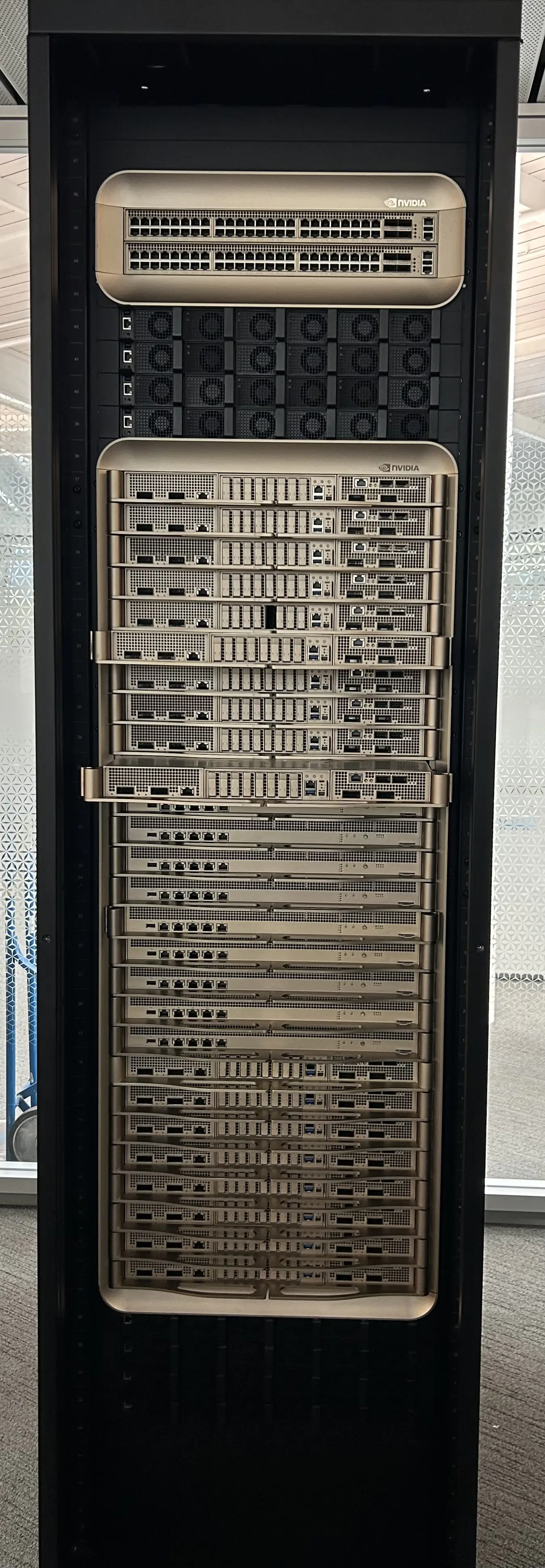
Six open-weight models released since April 2026 by DeepSeek, Moonshot AI, MiniMax and Ant Group were most likely created on Nvidia Blackwell GPUs, chips the U.S. bars from export to China, according to a forensic analysis published this week by the nonprofit research group Unemployment Labs. The study reads hardware traces left in the models’ published weights. It matters because it is the first public technical evidence for what U.S. officials had only alleged, and it lands days after Jensen Huang resigned as Nvidia CEO amid a scandal over chip smuggling.
What the study found
The report, led by former OpenAI researcher Will DePue, lists DeepSeek-V4-Flash and DeepSeek-V4-Pro, Moonshot’s Kimi K3 and Kimi K3.1-Pro, MiniMax-M3 and Ant Group’s Ling-3.1-flash as matching Blackwell hardware. Earlier models from the same labs, including DeepSeek-V3, Kimi K2.5, MiniMax-M2.7 and Ling-3.0-flash, match Nvidia’s older Hopper generation instead.
The switch is recent, between April and October 2026 depending on the lab. Not every lab has switched: the newest readable models from Alibaba’s Qwen team, Zhipu, Tencent, Xiaomi and StepFun all matched Hopper, and Meituan’s LongCat-2.0, which the company says was trained on its own “AI ASIC superpods”, showed no Nvidia trace at all.
The authors stress the limits. The fingerprint shows where the starting weights were created, which supports but does not prove that training ran on the same chips. It also says nothing about where the GPUs sat, how access was obtained or whether any law was broken.
How a model’s weights can reveal its hardware
Before training, every weight in a model gets a random starting value. In PyTorch on Nvidia GPUs, those numbers come from a seeded generator split across thousands of parallel threads, and the number of threads depends on how many processing units (streaming multiprocessors, or SMs) the chip has. Hopper H100, H200 and H800 chips have 132 SMs; Blackwell B200 and B300 have 148; GB200 and GB300 have 152. The same seed on a different chip puts the same numbers in different positions.
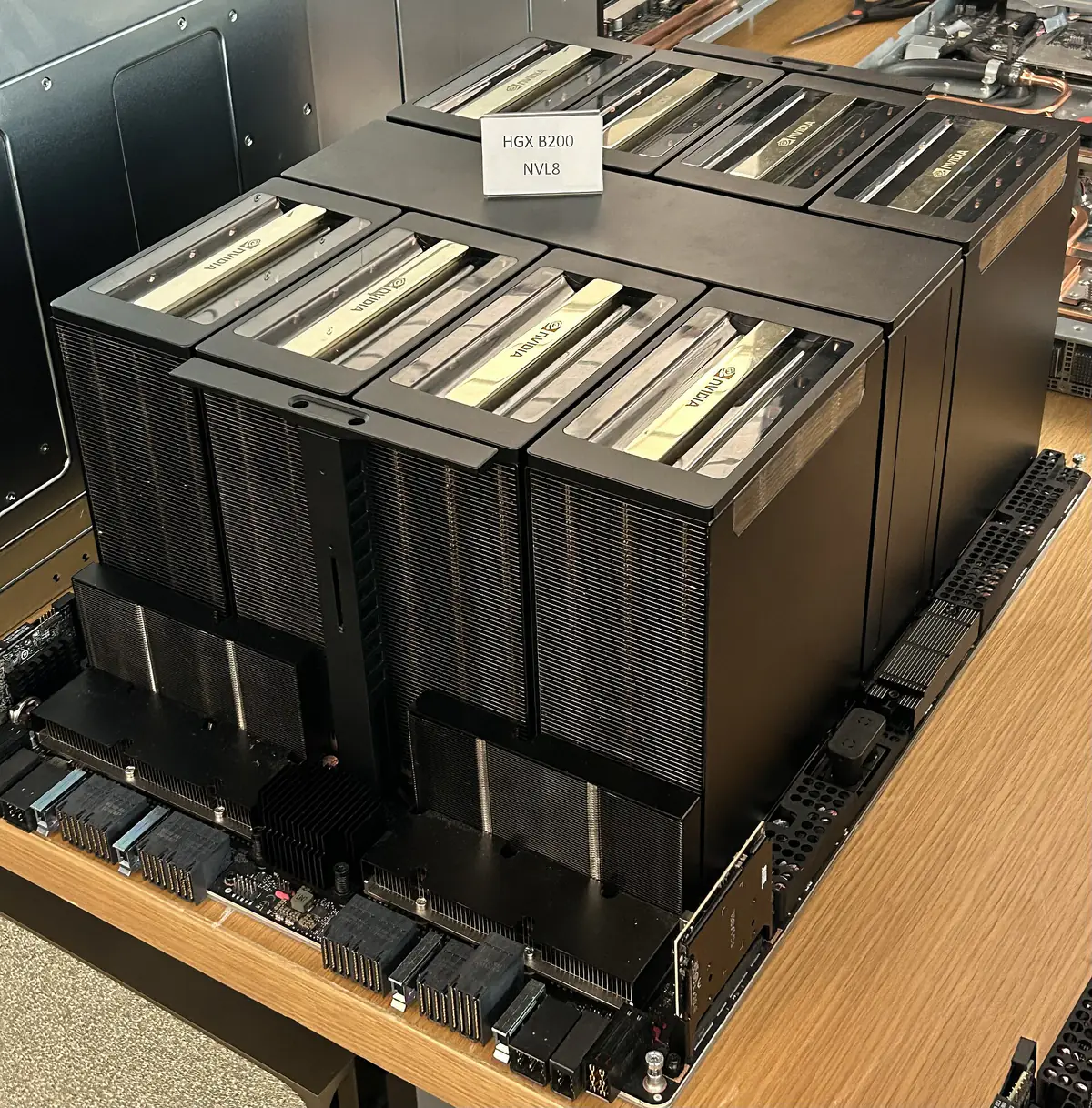
Some weights, such as those for tokens a model never sees in training, keep their starting values almost unchanged. The researchers searched about 6 trillion seed-and-layout combinations for the one that reproduces those traces, then checked it on held-out weights. They report evidence of 49 to 1,385 sigma for the six models, against about 8 sigma for the best chance match. For DeepSeek-V4-Flash and Kimi K3 they also confirmed the result on physical Blackwell chips, and their method matched the publicly disclosed hardware for all 24 models where the developer had said what it used, including Nvidia’s own Nemotron-3 Ultra.
How big the training runs were
The group estimates that Kimi K3 and DeepSeek-V4-Pro each needed about 4,500 and 3,000 Blackwell GPUs for two to three months, a cluster costing $200 million to $300 million at the largest. The authors say they are not confident in these figures, which depend on details no lab has disclosed and were revised upward on November 12.
How it fits the export-control fight
The findings add evidence to a debate that has been running all year. Epoch AI has published trade data consistent with about $3 billion of AI servers moving from Malaysia to China between April 2024 and June 2025, flows that collapsed after Malaysia introduced a permit requirement. Offshore data centers are another route: renting Blackwell capacity abroad is largely allowed under current rules, which is why some analysts want controls on who uses chips, not only where they ship.
For Nvidia the timing is awkward. Our earlier report on the Megaspeed memo and H200 shipments to China described the company at the center of the smuggling allegations that preceded Huang’s exit. For users of Chinese open-weight models such as Kimi K3.1-Pro, nothing changes technically, but procurement and compliance teams may face new questions.
What to watch next
- Responses from DeepSeek, Moonshot AI, MiniMax and Ant Group, none of which had commented publicly when we published.
- Whether the U.S. Commerce Department opens inquiries into the cloud or offshore providers behind these training runs.
- Proposals to extend export rules from chip shipments to remote access and chip usage.
- Independent replications of the method by other researchers, which the open weights make possible.
Key takeaways
- Six Chinese open-weight models released since April 2026 match export-controlled Nvidia Blackwell GPUs, a forensic study says.
- Earlier models from the same four labs match the older Hopper generation.
- The method reads thread-layout traces left by random initialization in the published weights.
- It cannot show where the chips were, how they were accessed or whether rules were broken.
- Rough estimates put the largest training runs at thousands of Blackwell GPUs costing hundreds of millions of dollars.
Frequently asked questions
Which Chinese AI models were trained on Nvidia Blackwell chips?
The Unemployment Labs study names DeepSeek-V4-Flash, DeepSeek-V4-Pro, Kimi K3, Kimi K3.1-Pro, MiniMax-M3 and Ling-3.1-flash. It says their starting weights match Blackwell hardware, which strongly suggests but does not prove that they were trained on it.
Can you tell which GPU trained an AI model?
Sometimes. If a model is open-weight and was initialized with PyTorch on Nvidia GPUs, the layout of its random starting values depends on the chip’s number of processing units, and traces of that layout can survive training. Closed models, and models initialized on ordinary processors or with other frameworks, cannot be checked this way.
Is it illegal for Chinese companies to use Nvidia Blackwell GPUs?
Blackwell chips need a U.S. license for export to China, and none has been reported for these labs. Renting Blackwell capacity in data centers outside China is largely not covered by current rules, so the study alone does not establish a violation.