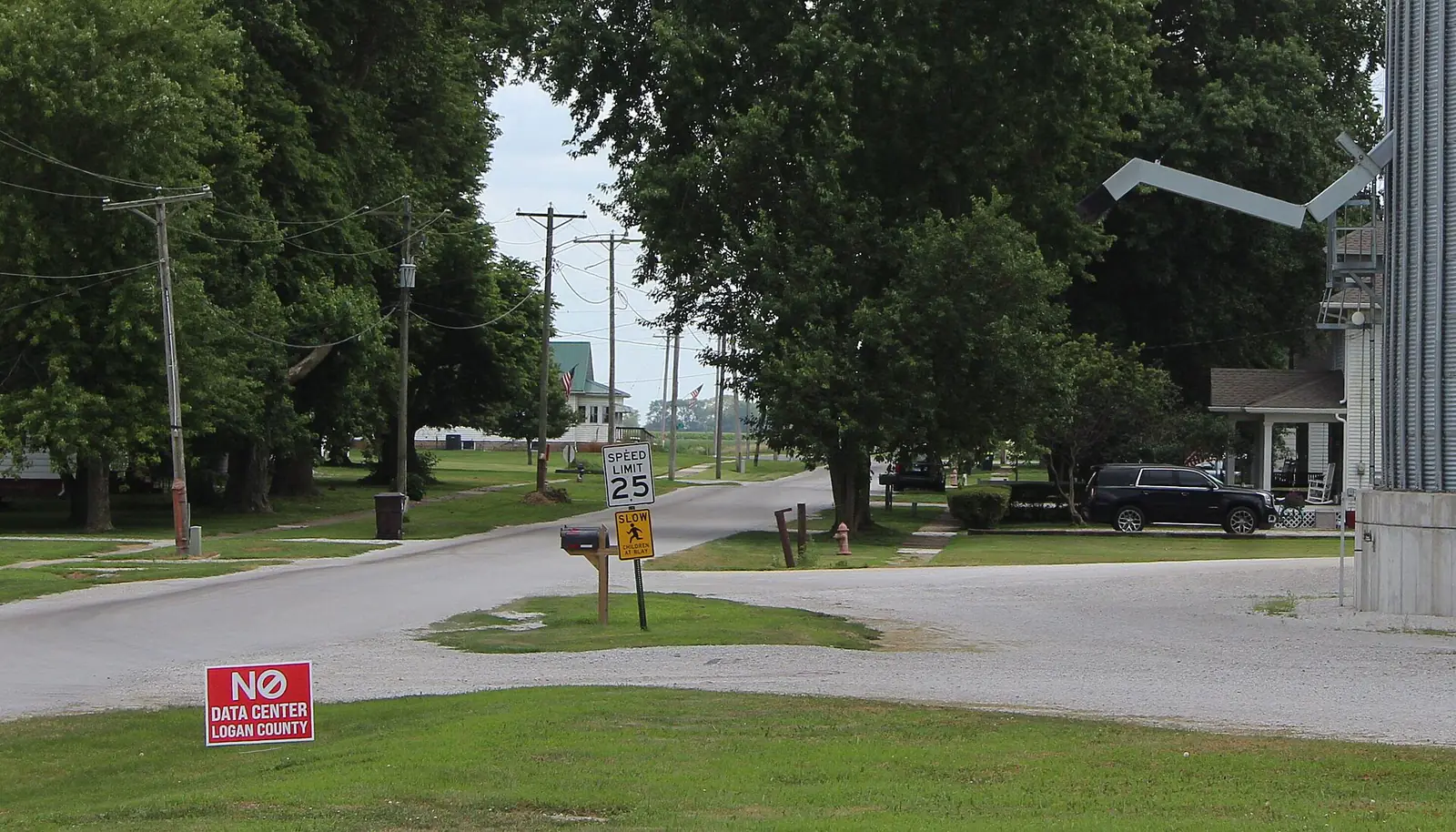
The November 3 midterm elections turned local opposition to AI data centers into a visible political force. Exit polling and ballot-measure tallies reported on November 4 show voters across several states backing candidates and local rules that would slow or limit the buildings that power AI, just as Democrats won control of Congress while Republicans keep the White House. The result matters because new data center capacity is the physical foundation of the industry’s spending plans.
What the numbers show
Several outlets drew on the same data. The Verge reported that, in an NBC News poll of voters on Election Day, 76 percent said they opposed data centers in their own communities. TechCrunch, citing the same exit poll, described almost 80 percent as against building them in their neighborhoods, and said almost 60 percent called data centers a crucial or major factor in their vote. TechCrunch also reported that more than half of respondents think AI will do more harm than good. The small gap between 76 and “almost 80” is a rounding difference between outlets; we cite both rather than choose one.
Local ballot measures gave a more concrete count. According to The Verge, voters faced data center questions directly in 45 local ballot measures nationwide. As of Wednesday morning, tallies compiled by Redbud Consulting showed that 33 of them would restrict data center development. Counts were still moving when those reports were published, so the final figures may differ.
Where the backlash landed
The pushback was strongest in states already at the center of the AI buildout:
- Ohio: TechCrunch notes that the opposition was especially visible where OpenAI has eyed a $500 billion data center backed by more than $100 billion in financing from NVIDIA. An Ohio county where Meta had planned a 700,000-square-foot facility passed a ban on data centers, and local communities across the state voted overwhelmingly against buildout measures. Morgan Stanley analysts cited by TechCrunch see the incoming Democratic governor, Amy Acton, as a risk to Ohio’s plans.
- Texas and Michigan: The Verge says Texas Governor-elect Gina Hinojosa and Michigan Senator-elect Abdul El-Sayed both support moratoriums on development.
- Other states: TechCrunch reports that candidates in Texas, Maine, Michigan, Nevada, Georgia and South Carolina won seats after taking a stance against rapid buildout.
Reporters were careful about causation. The Verge points out that it is hard to draw a direct line from data center anger to any one result. Republican Byron Donalds, who had praised development in Florida, was elected governor, and Iowa’s Democratic Governor-elect Rob Sand opposed a moratorium that his challenger favored. Even so, those candidates had to take a position during the campaign, and the Verge expects continued pressure for at least some guardrails.
What the money bought
AI-industry political groups spent heavily and got mixed returns. TechCrunch reports that two PACs, American Mission and Building the Future, spent a combined $4.8 million backing South Carolina Senate candidate Darline Graham, who lost. American Mission is the Republican arm of Leading the Future, a group backed by OpenAI president Greg Brockman and Andreessen Horowitz. Its Democratic arm, Think Big, did better with Florida Rep. Jared Moskowitz, who won. On the other side, Public First, which is backed by Anthropic, saw several Republicans it supported lose but had more success with Democrats.
TechCrunch quotes researcher Anshi Bhatt saying money does not buy outcomes in modern politics, and that creating a local villain can build campaign momentum. That framing helps explain why a physical building, with its power draw and noise, can be a stronger campaign symbol than abstract AI policy.
What happens next
Likely next steps reported by TechCrunch include more construction moratoriums and rules requiring data centers to pay for their own grid upgrades rather than passing costs to nearby residents. Goldman Sachs predicts construction delays in states such as Georgia and Texas. In Congress, Democratic control could improve the odds for bills like the nationwide moratorium proposed by Sen. Bernie Sanders and Rep. Alexandria Ocasio-Cortez, though TechCrunch notes any such bill would face a possible veto. A separate proposal, the GRID Savings Act from Sen. Martin Heinrich, would stop grid infrastructure costs from being passed on to communities.
What it means for the AI buildout
For developers, the practical effect is a slower and more expensive permitting environment: more local hearings, more demands for community benefits and more scrutiny of power sources. We have covered the other side of the same tension, from OpenAI’s Grid Protectors program in Georgia to the court case over xAI’s gas turbines in Memphis. Our explainers on data center capex and power-flexible data centers show why electricity is the constraint companies are trying to engineer around.
What to watch next
- Final tallies for the 45 local ballot measures and which of the 33 restrictive measures take effect.
- Whether new state moratoriums or cost-allocation rules are introduced in Ohio, Texas, Georgia and Michigan.
- Whether Congress takes up a federal moratorium or the GRID Savings Act, and whether a veto threat follows.
- How companies change siting plans, power deals and community commitments in response.
Key takeaways
- Exit polling reported by two outlets puts opposition to local data centers at roughly 76 to 80 percent of voters polled.
- By one tally, 33 of 45 local ballot measures on data centers would restrict development.
- Analysts and reporters caution that the link between data center anger and individual election results is hard to prove.
- Expect tighter siting rules and demands that data centers pay for their own grid upgrades.
Frequently asked questions
Did voters ban AI data centers?
No nationwide ban exists. Dozens of local measures would restrict development in their areas, but state and federal rules are still being debated.
Why are voters opposed to data centers?
Reporting points to electricity costs, pollution from on-site power such as gas turbines, and a lack of community say over approvals.
Could Congress stop data center construction?
A national moratorium has been proposed, but it would need to pass Congress and avoid a presidential veto, which TechCrunch says is possible.